Explore cutting-edge articles on laboratory products, industry innovations, and research trends with Lab Consulting.
Laboratory freezers are becoming essential infrastructure for pharmaceutical research, clinical diagnostics, biotechnology, and public-health laboratories. Global buyers now assess more than purchase price. They examine temperature stability, energy consumption, alarm systems, service coverage, and long-term storage security. A freezer may look impressive on a specification sheet, yet perform poorly in a hot, unstable facility.
Industry reports support this changing market. Grand View Research identifies expanding demand for laboratory freezers, driven by biobanks, vaccine development, personalized medicine, and pharmaceutical production. MarketsandMarkets also links cold-chain growth with stricter requirements for temperature-controlled materials and monitoring technologies. These findings matter because a freezer protects valuable samples, not simply containers. A single temperature excursion can damage years of research.
Technical guidance adds another layer. The World Health Organization’s Laboratory Biosafety Manual, fourth edition, emphasizes validated equipment, documented procedures, and continuous monitoring. Buyers should therefore compare recovery time after door opening, uniformity across shelves, backup alarms, remote notifications, and access to replacement parts. For ultra-low-temperature models, insulation quality and compressor reliability deserve close attention. Energy labels also matter, especially where electricity costs are high.
No ranking is perfect. The “top” laboratory freezers depend on sample type, capacity, climate, voltage, maintenance skills, and regulatory expectations. A compact -20°C unit may suit routine reagents, while a -80°C freezer serves sensitive biological materials. This guide evaluates leading options through evidence, practical laboratory experience, manufacturer transparency, and global support—not marketing claims alone. Some reported performance figures still require independent verification. That limitation should remain visible.
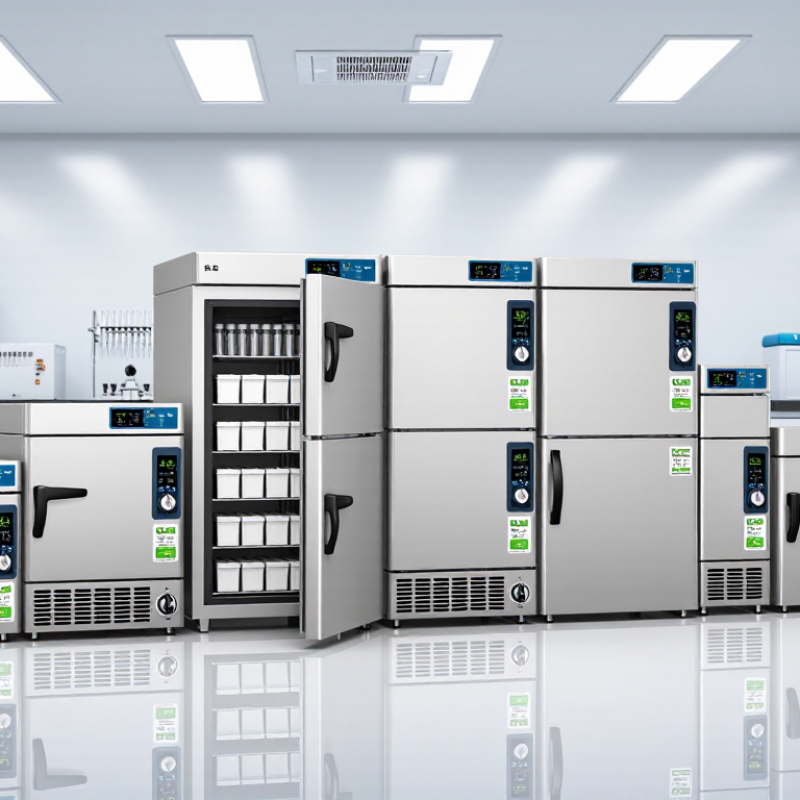
Laboratory freezer types serve different temperature and workflow requirements. Upright and under-counter freezers usually operate near -20°C. They suit short-term storage of reagents, enzymes, and prepared samples. Ultra-low-temperature freezers, commonly set at -80°C, protect DNA, RNA, clinical specimens, and some vaccine materials. Cryogenic systems reach below -150°C. They support long-term preservation of cells, tissues, and reproductive materials.
The World Health Organization reported 14.5 million zero-dose children in 2023. This figure highlights the pressure on reliable cold-chain infrastructure. Vaccine freezers often maintain a controlled range from -50°C to -15°C, while refrigerators typically use 2°C to 8°C. The WHO Vaccine Management Handbook recommends temperature mapping, alarm testing, and documented contingency plans. A cold chamber is not enough.
According to the 2024 MarketsandMarkets laboratory freezer report, demand is expanding across pharmaceutical research, hospitals, and biobanks. Energy use deserves attention. An ultra-low freezer can consume substantial electricity, especially when its door opens repeatedly or its condenser accumulates dust. Newer systems may reduce consumption, but advertised savings require independent verification. Global buyers should compare recovery time, usable volume, noise, calibration records, and service response. I have seen storage plans fail because the freezer fit the room, but not the daily workflow. Reliability begins with realistic loading patterns.
Laboratory freezer performance depends on more than its lowest advertised temperature. Buyers should compare temperature stability, recovery speed, energy use, alarm accuracy, and storage capacity. A freezer rated at -80°C may still perform poorly after frequent door openings. In real laboratories, sample loading patterns matter.
Temperature mapping is essential. Sensors should confirm stable conditions across shelves, corners, and the door area. Look for calibrated probes, adjustable alarms, insulated doors, and backup power options.
Noise and heat output also affect placement, especially in smaller facilities. Global buyers should check voltage compatibility, local service access, spare parts, and applicable safety requirements. These details are easy to overlook. They can disrupt operations later.
Tips: Request test data under realistic loads, not empty-cabinet conditions. Check recovery time after a 30-second door opening. Review alarm logs and calibration records. Ask whether technicians can service the unit locally. Do not rely only on energy labels; room temperature and maintenance habits change actual consumption. A freezer may appear ideal during a short demonstration, yet become inconvenient after months of frost buildup. Comparing lifecycle performance is wiser, although it requires more time and careful judgment.
Choosing top laboratory freezers for global buyers requires more than comparing advertised temperatures. Reliable temperature control protects samples during long storage and frequent door opening. Look for stable setpoints, rapid recovery, calibrated sensors, and independent alarms. A freezer that reaches a low temperature but fluctuates widely may still create risks. Temperature mapping is valuable, especially when shelves are fully loaded. Small details matter, such as door seals, probe placement, and backup power compatibility.
Storage capacity should match daily workflow, not only current demand. Adjustable shelves and clearly labeled compartments can reduce search time and unnecessary door opening. Consider the size of standard containers, packaging clearance, and future sample growth. Energy efficiency also deserves careful attention. Better insulation, efficient compressors, and intelligent defrost systems can lower operating costs. However, energy labels do not tell the whole story. Room temperature, maintenance quality, and opening frequency affect real consumption. I have seen efficient units perform poorly when ventilation space was ignored.
Tips: Request independent test data and temperature recovery results. Check alarm visibility from outside the room. Measure the available doorway and floor space before ordering. Ask about local service access and spare-part availability. Leave ventilation clearance. It is easy to overlook. Select a capacity that leaves usable airflow around stored materials, rather than filling every shelf tightly. Total ownership cost may reveal a different choice from the lowest purchase price.
For global buyers, a laboratory freezer is compliant only when its full operating context is documented. The unit should match destination voltage, plug configuration, ambient temperature, and site ventilation. Ask for electrical safety evidence aligned with recognized standards, such as IEC 61010-1, plus certificates required in the importing country. A CE mark may support European conformity, but it does not replace local registration or inspection. Check the nameplate, technical file, and declaration of conformity before purchase. Documentation matters. Small paperwork gaps can delay installation.
Temperature performance needs measurable proof. Request factory test results, calibrated sensors, alarm verification, and a temperature-mapping report under realistic loading. A freezer rated at -86°C may not hold that temperature during frequent door openings or unstable power. Look for independent calibration traceability, audible and visual alarms, remote notifications, and a tested backup plan. Review refrigerant information as well; environmental rules vary by market, and documents should identify refrigerant and recovery requirements. Keep records accessible to technicians.
During equipment reviews, buyers often compare setpoints before checking recovery time. That choice can be expensive. Ask how long the chamber remains within limits after a power interruption, and whether the alarm battery is replaceable locally. Service manuals, spare-part availability, and training matter as much as cooling capacity. No supplier document is perfect. Recheck translated certificates, confirm test dates, and have a qualified local professional review the installation before samples enter the freezer. Check the label.
What Are the Top Laboratory Freezers for Global Buyers?
Selecting the right laboratory freezer starts with the sample, not the product catalogue. Define the required range first: standard frozen storage often uses -20°C, while ultra-low-temperature units operate near -80°C. The WHO Laboratory Biosafety Manual, 4th edition, stresses documented temperature control, risk assessment, and emergency planning. A freezer without reliable alarms is a weak link.
Energy use deserves equal attention. The U.S. Department of Energy reports that laboratories can consume five to ten times more energy per square foot than offices. Ultra-low-temperature freezers may therefore create substantial operating costs. Compare annual energy consumption, heat output, compressor recovery, and insulation performance. A low purchase price can mislead global buyers.
Check local voltage, frequency, ambient temperature, door access, and service availability. In tropical locations, confirm performance at high room temperatures. In remote facilities, ask about backup power, spare parts, manual temperature logging, and alarm connectivity. The CDC Vaccine Storage and Handling Toolkit recommends calibrated digital data loggers with continuous monitoring for temperature-sensitive storage. Laboratory samples may require similar discipline.
Do not overlook internal volume. An oversized cabinet wastes energy, while a crowded cabinet blocks airflow. I would also question impressive recovery claims unless testing conditions are clearly published. Independent certification helps, but real installation conditions still matter. Some procurement decisions fail because users assess the freezer, not the whole storage system.
Comparison of common laboratory freezer categories and the key specifications that influence international purchasing decisions
| Laboratory Freezer Category | Typical Operating Temperature | Typical Capacity | Typical Temperature Uniformity | Typical Energy Demand | Recommended Applications | Important Global-Buying Considerations | Essential Safety and Monitoring Features |
|---|---|---|---|---|---|---|---|
| Laboratory Refrigerator-Freezer Combination | Refrigerator: 2–8°C Freezer: approximately −20°C |
300–700 L total internal volume | Usually within ±3°C to ±5°C, depending on compartment and loading | Approximately 2–6 kWh per day, depending on size and ambient conditions | Short- to medium-term storage of reagents, media, controls, and general laboratory materials | Confirm separate temperature control, door configuration, local voltage, frequency, plug type, and ambient operating class | High-temperature alarm, door-open alarm, digital display, keyed access, and optional remote monitoring |
| Standard −20°C Upright Laboratory Freezer | Approximately −15°C to −25°C | 200–700 L | Typically within ±3°C to ±5°C | Approximately 1.5–4 kWh per day | Enzymes, reagents, samples, prepared media, and materials that do not require ultra-low temperatures | Look for adjustable shelves, strong door gaskets, corrosion-resistant interiors, and compatibility with regional electrical standards | Temperature alarm, audible and visual alerts, lockable door, alarm relay, and battery-backed alarm memory |
| −30°C Laboratory Freezer | Approximately −25°C to −35°C | 300–700 L | Typically within ±3°C to ±5°C | Approximately 2–6 kWh per day | Longer-term storage of selected biological materials, reagents, enzymes, and clinical research samples | Verify heat rejection requirements, compressor performance in warm climates, service availability, and refrigerant compliance | Independent over-temperature alarm, power-failure alarm, door alarm, remote contacts, and temperature data logging |
| −40°C Laboratory Freezer | Approximately −35°C to −45°C | 300–600 L | Typically within ±3°C to ±5°C | Approximately 3–8 kWh per day | Research samples requiring colder storage than standard −20°C units but not ultra-low temperatures | Check rated performance at the site’s maximum ambient temperature, defrost strategy, voltage tolerance, and replacement-part availability | Continuous temperature recording, dual alarms, emergency access, lockable storage, and optional backup-power connection |
| Ultra-Low Temperature Freezer | Typically −60°C to −86°C | 300–900 L gross capacity | Typically within ±3°C to ±5°C after stabilization | Approximately 8–20 kWh per day, depending on efficiency, ambient temperature, and usage | Long-term storage of DNA, RNA, viruses, vaccines used in research, proteins, cell materials, and biobanks | Prioritize energy efficiency, heat-load management, local technical support, refrigerant regulations, door-opening recovery, and generator compatibility | Multi-level alarms, emergency battery, access control, remote monitoring, temperature logging, inner doors, and backup cooling provisions |
| Undercounter Laboratory Freezer | Usually approximately −20°C; some models operate near −30°C | 50–200 L | Typically within ±3°C to ±5°C | Approximately 0.8–3 kWh per day | Point-of-use storage in laboratories with limited floor space or frequent sample access | Confirm front or rear ventilation clearance, countertop load limits, installation dimensions, door swing, and local service coverage | Temperature alarm, door-open alarm, digital controller, lock, and optional remote alarm output |
| Chest Laboratory Freezer | Usually approximately −20°C to −40°C | 100–600 L | Often more stable than upright designs because cold air loss is lower when opened | Approximately 1–5 kWh per day | Bulk storage of frozen reagents, specimens, and materials that are accessed less frequently | Assess available floor space, loading ergonomics, basket organization, manual defrost requirements, and protection against condensation | High-temperature alarm, lockable lid, power-failure alarm, temperature display, and internal storage baskets |
| Cryogenic Mechanical Freezer | Approximately −130°C to −150°C | Typically 100–500 L | Model-dependent; often controlled within several degrees after stabilization | Usually higher than conventional ultra-low freezers and strongly dependent on compressor design | Specialized preservation of sensitive biological materials that require temperatures below the range of conventional ultra-low freezers | Confirm specialized installation, technical expertise, refrigerant and environmental requirements, noise level, heat output, and long-term service capability | Continuous monitoring, independent high-temperature alarm, emergency power planning, access control, and validated temperature records |
Buying note: Specifications are representative market ranges rather than model-specific guarantees. Before purchase, verify the manufacturer’s tested performance, ambient-temperature rating, electrical requirements, applicable safety certifications, refrigerant regulations, warranty terms, and local after-sales support.
Subscribe to our newsletter and receive the latest news and exclusive insights every month. No spam.
LabConsulting GmbH and LC LabService GmbH are Austrian companies which cooperate with over 600 manufacturers and offers a selection of more than 180,000 products and various laboratory product and service solutions for our Labcustomers.
Die LabConsulting GmbH und die LC LabService GmbH sind österreichische Unternehmen, die mit über 600 global verteilten Herstellern zusammenarbeiten und mit einer Auswahl von mehr als 180.000 Produkten und verschiedenen Laborprodukt- und Servicelösungen unseren Parnern im Labor anbieten.
INSTOCK CATALOGOur services
Our services