Top 10 Plastic Utensils Manufacturers for Global Buyers?
Choosing reliable Plastic Utensils manufacturers requires more than comparing prices on a supplier list. Global buyers must examine production capacity, material consistency, food-contact documentation, packaging quality, and delivery performance. A polished catalog can hide uneven edges, weak forks, or unstable color batches. Small details matter.
Ellen MacArthur, a leading circular-economy expert, states, “A circular economy is based on designing out waste and pollution.” This principle is highly relevant to disposable and reusable Plastic Utensils. Manufacturers should explain their material choices, recycled-content claims, factory controls, and end-of-life guidance clearly. Buyers should also request samples before approving large orders. A spoon that bends during testing may reveal deeper process problems.
This guide reviews ten manufacturers serving international buyers. The evaluation considers product range, customization, quality management, export experience, minimum order quantities, and communication speed. It also considers practical sustainability indicators, not vague environmental language. Some companies may appear strong online but offer limited evidence. That weakness deserves attention.
No ranking is perfect. Markets change. Factory performance can vary by season, material supply, and order volume. Buyers should verify current certificates, audit records, and shipping terms independently. Clear documentation builds confidence. Direct questions build more.
The selected manufacturers represent different strengths, including high-volume production, custom branding, reusable designs, and food-service supply. Their differences help importers match a supplier with the right project, budget, and risk tolerance. The best choice is not always the cheapest. Reliable results usually come from transparent communication, tested samples, and realistic expectations.
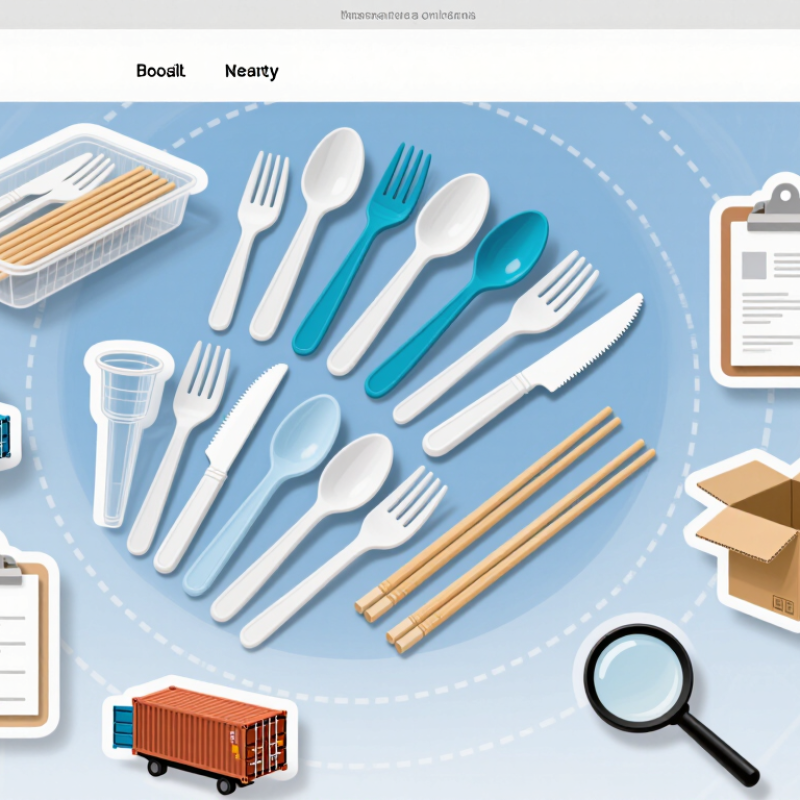
How the Top 10 Plastic Utensil Manufacturers Are Selected
Selecting the top 10 plastic utensil manufacturers requires more than comparing online catalogs. Global buyers should assess production capacity, material traceability, quality systems, and export experience. The OECD Global Plastics Outlook reports 353 million tonnes of plastic waste in 2019. Packaging represented about 40% of that volume. This highlights why responsible material control matters.
A reliable selection process should begin with factory audits and verified documentation. Review resin specifications, food-contact test reports, mold maintenance records, and batch inspection procedures. Independent testing should check dimensions, bending strength, heat resistance, odor, and chemical migration. Production consistency also matters. A sample may look excellent, while a later shipment feels thinner. No scoring model is perfect. Buyers should compare at least three production batches before ranking suppliers. The UNEP report Turning off the Tap also stresses reuse, better product design, and improved recycling systems. Manufacturers using lighter designs and recyclable materials deserve closer attention, but claims require evidence.
Tips: Ask for a live production video, recent laboratory reports, and a shipment reference. Confirm carton dimensions before ordering. Calculate total landed cost, not only unit price. Check whether factory capacity matches your seasonal demand. A low quote can hide weak tooling, slow replacement parts, or high defect rates. Record every result in a weighted scorecard, then revisit the ranking after trial orders.
Profiles of the Leading Plastic Utensil Manufacturers
Leading plastic utensil manufacturers serve restaurants, retailers, catering companies, and foodservice distributors worldwide. Their profiles often reveal different strengths, such as high-volume production, custom molding, recycled-content options, or export experience. Reliable factories usually operate modern injection-molding lines, controlled storage areas, and documented inspection procedures.
Some manufacturers focus on forks, knives, and spoons for everyday meals. Others produce cocktail picks, serving tools, and sealed travel sets. Experienced suppliers can adjust utensil weight, texture, color, and packaging format. They should also provide material specifications, sample approvals, and clear production timelines. However, product catalogs can look impressive while factory capacity remains limited. This is worth checking.
Tips: Ask for recent production photos, test reports, and a sample batch before placing a large order. Confirm food-contact compliance for the destination market. Review carton strength, labeling accuracy, and delivery records. Small details matter.
Leading manufacturers also differ in communication quality. A dependable team answers technical questions directly and reports delays early. It should explain mold ownership, minimum order quantities, and replacement policies without vague promises. Buyers may compare unit prices, but total value includes defect rates, packaging waste, and shipment stability. I have found that the cheapest quote is not always the least expensive choice. A practical assessment should combine factory evidence, sample performance, and long-term service expectations.
Product Ranges, Materials, and Manufacturing Capabilities
Global buyers comparing the top 10 plastic utensil manufacturers should examine product range, material control, and production depth. Common products include forks, spoons, knives, stirrers, trays, lids, and serving tools. Typical materials are polypropylene, polystyrene, PET, and food-contact polyethylene. Some factories also process recycled-content plastics or compostable biopolymers. Claims need evidence, not attractive wording.
Manufacturing capability separates a catalog supplier from a dependable partner. Injection molding supports precise shapes and high-volume orders. Thermoforming suits lightweight trays and customized packaging. Ask about mold ownership, cavity counts, automated inspection, packing speed, and monthly output. PlasticsEurope reported global plastics production at 400.3 million tonnes in 2022, showing the scale of this supply chain. However, large capacity does not guarantee stable quality. Small color differences can affect an entire shipment. Food-contact testing, batch traceability, and documented quality systems matter more than factory size.
Tips: Request samples from three production batches. Check edge smoothness, odor, bending strength, and dimensional consistency. Confirm whether recycled or compostable claims match recognized testing standards and destination-market rules. The OECD’s Global Plastics Outlook estimated 353 million tonnes of plastic waste in 2019. This figure should make buyers question unnecessary packaging and disposable designs. A perfect scorecard is unrealistic. Review pricing, performance, lead time, and environmental evidence together before selecting a manufacturer.
Top 10 Plastic Utensils Manufacturers for Global Buyers
Product ranges, materials, and manufacturing capabilities: representative material-density benchmark
Material selection directly affects utensil weight, rigidity, heat performance, durability, and manufacturing method. The values shown are representative densities for commonly used material families; exact specifications vary by grade, additives, food-contact approvals, and supplier production capabilities. Global buyers should also verify injection molding, overmolding, thermoforming, extrusion, color matching, and quality-control capacity.
Global Certifications, Quality Standards, and Customization Options
Top 10 Plastic Utensils Manufacturers for Global Buyers?
When comparing ten plastic utensil manufacturers, certifications should match the destination market. Look for ISO 9001 systems, food-contact compliance, and documented migration testing. Common references include FDA food-contact requirements, EU Regulation 10/2011, and LFGB testing. Requirements differ by product and country. Ask for current test reports, factory details, and batch traceability. A certificate alone proves little. The exact material, color, and production site must appear in the documents.
Quality inspection should cover more than appearance. Reliable manufacturers test weight, dimensions, edge smoothness, heat resistance, and breaking strength. For high-volume orders, request samples from different production batches. Check packaging compression too. A spoon that bends inside a hot meal creates complaints quickly. Recycled content may support sustainability goals, but it needs clear composition records and suitable food-contact evidence. Some suppliers explain this poorly. That is a warning, not a minor communication issue.
Tips
Define the intended food, temperature, market, and delivery volume before requesting quotations. Compare certifications with the actual utensil model. Ask whether customization changes compliance testing. Custom handles, colors, logos, and molds can affect lead times and minimum order quantities. Approve a production sample before mass manufacturing. Keep one sealed sample for future comparison. This step feels slow. It can prevent expensive disputes. Also review the supplier’s corrective-action process, because even strong factories may experience occasional defects. Reliability depends on response speed, not perfect promises.
How Global Buyers Can Compare Suppliers and Place Orders
Top 10 Plastic Utensils Manufacturers for Global Buyers
Global buyers should compare suppliers through evidence, not polished catalogs. The OECD’s Global Plastics Outlook reports that plastic waste reached 353 million tonnes in 2019, more than double the 2000 level. Packaging represented about 40% of plastic waste. This makes material selection and end-of-life planning important during supplier reviews.
Create a scorecard for ten potential manufacturers. Check resin type, food-contact documentation, migration-test results, factory audits, and batch traceability. Also compare mold capability, minimum order quantity, production capacity, and export experience. Ask for samples from actual production lines, not showroom pieces. Inspect fork edges, spoon stiffness, surface marks, and packaging damage. Small defects become expensive complaints.
Request a formal quotation with Incoterms, payment stages, tooling ownership, lead time, and replacement terms. Confirm whether quoted prices include packaging, testing, and customs documents. A low unit price can still be a bad deal. The OECD notes that only about 9% of plastic waste was recycled globally in 2019, so buyers should question unsupported recycling claims. Recycled content must be verified by certificates and batch records. Do not rely on vague promises.
Place a pilot order before scaling. Record delivery accuracy, carton strength, and product consistency. My own comparison sheets sometimes overvalue price and undervalue communication speed. That mistake is easy to repeat. Supplier performance should be reviewed after every shipment, because one successful sample proves very little.


