BlogsBlogs

Explore cutting-edge articles on laboratory products, industry innovations, and research trends with Lab Consulting.

Explore cutting-edge articles on laboratory products, industry innovations, and research trends with Lab Consulting.

China Top 10 Aluminum Lid Manufacturers for Global Buyers

Choosing a reliable Aluminum Lid manufacturer requires more than comparing prices on a supplier list. Global buyers must examine material grade, forming accuracy, sealing performance, surface treatment, and production consistency. A lid may look simple, yet a small dimensional error can cause leakage, poor fit, or damaged threads during filling and transport.

Tom Dobbins, former President and CEO of the Aluminum Association, stated, “Aluminum is infinitely recyclable and retains its properties throughout the recycling process.” This principle gives Aluminum Lid production an important sustainability advantage. However, recyclability alone does not prove supplier quality. Buyers should verify alloy specifications, coating safety, tooling capability, inspection records, and export experience. Factory audits and sample testing remain essential.

This guide introduces China’s top ten Aluminum Lid manufacturers for global buyers. It considers practical factors, including product range, customization, minimum order quantities, certifications, lead times, and communication reliability. Some manufacturers may offer excellent technical support but limited flexibility for small orders. Others may provide attractive prices while requiring closer quality supervision. That difference matters.

The ranking is not absolute.

Market conditions change. Supplier performance can vary between factories, product lines, and production batches. Buyers should treat this overview as a starting point, not a final purchasing decision. Clear drawings, approved samples, written specifications, and continuous quality checks can reduce avoidable problems. Even experienced buyers sometimes overlook packaging protection during shipment. That mistake can be costly.
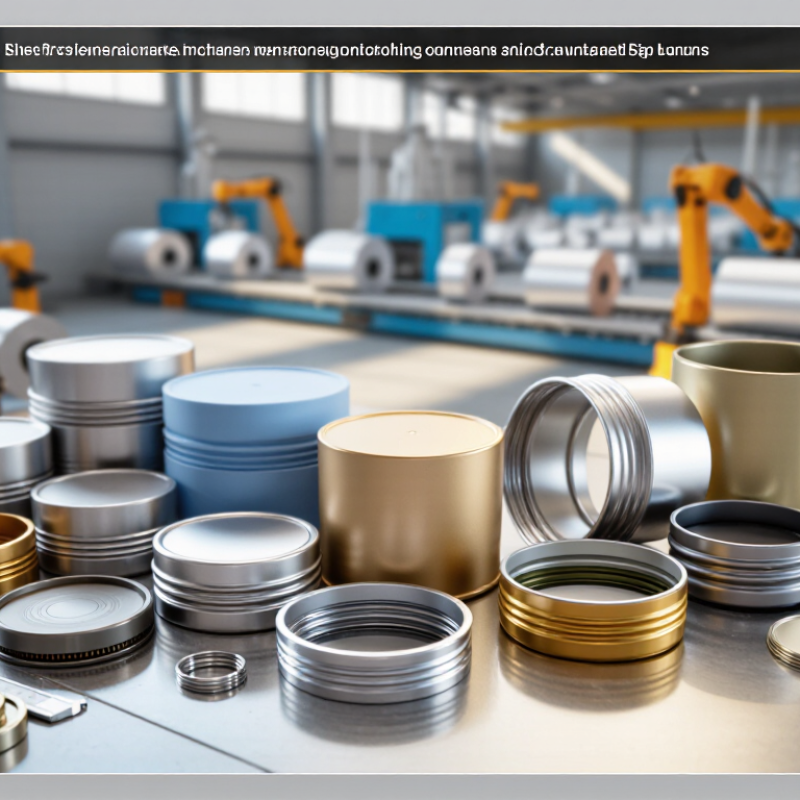
China Top 10 Aluminum Lid Manufacturers for Global Buyers

What Aluminum Lids Are and Why Global Buyers Need Reliable Suppliers

Aluminum lids are thin, formed closures used on jars, bottles, tins, and specialty containers. They protect contents from moisture, oxygen, light, and accidental opening. Their value depends on more than appearance. Alloy grade, thickness, liner fit, coating, and sealing pressure all affect performance.

Global buyers need reliable suppliers because small defects can stop an entire packaging line. A lid that bends during capping creates leakage, waste, and customer complaints. The International Aluminium Institute reports that recycling aluminum requires about 95% less energy than producing primary aluminum. This supports aluminum’s sustainability case, but recycled content still needs consistent testing. Supplier audits should review material certificates, batch records, dimensional checks, and migration testing where contact rules apply. ISO 2859-1 sampling can support acceptance decisions, although sampling alone cannot replace process control.

Tips: Request production samples first. Measure lid diameter, curl height, liner hardness, and sealing torque. Ask for inspection photos and traceability records. Do not trust a polished sample alone. It may hide unstable mass production.

A practical supplier should explain tolerances clearly. They should also report defects honestly. Perfect claims deserve careful questions. Cost matters, but repeatable quality matters more.

How China’s Top 10 Aluminum Lid Manufacturers Were Selected

China Top 10 Aluminum Lid Manufacturers for Global Buyers

The selection process focused on evidence, not website design or sales claims. Each manufacturer was reviewed through production records, sample checks, and quality documents. Factory experience also mattered, especially with aluminum forming, coating, lining, and sealing control.

We examined lid dimensions, material thickness, edge finish, liner adhesion, and closure performance. Sample lots were checked for scratches, uneven curling, odor, and leakage risks. Production capacity was compared with stated lead times, minimum order quantities, and export packaging. Details reveal discipline.

Compliance records received careful attention. We looked for documented food-contact declarations, traceable materials, inspection procedures, and corrective-action reports.

Delivery consistency, communication speed, and after-sales handling were also scored. No supplier is flawless. Some information was self-reported, so those claims received less weight. That limitation matters.

The final ten were selected through a balanced assessment of manufacturing capability, quality stability, technical knowledge, and buyer support. A lower defect rate helped, but it was not enough alone. We also considered whether a manufacturer could explain problems clearly and improve its process. Honest answers often proved more useful than polished presentations.

Profiles of China’s Top 10 Aluminum Lid Manufacturers

China Top 10 Aluminum Lid Manufacturers for Global Buyers

The first manufacturer focuses on standard aluminum lids for beverage bottles. Its strength is stable thickness control and fast tooling adjustment. The second specializes in pharmaceutical closures, using clean production rooms and documented inspection records. Batch traceability is clear, although buyers should verify current certifications directly.

The third serves food packaging projects and offers printed, embossed, and easy-open designs. The fourth supplies lids for cosmetics, where surface quality and color matching matter greatly. The fifth concentrates on customized molds for small and medium production runs. Samples are usually practical. However, mold fees can change after design revisions. The sixth provides recycled aluminum options and reports material percentages for review. Buyers should request independent test documents, not rely only on sales statements.

The seventh manufacturer supports high-volume export orders with automated pressing lines and vision inspection. The eighth produces tamper-evident closures and tests sealing performance under heat and pressure. The ninth is known for flexible packaging support, including artwork checks and carton planning. The tenth combines aluminum forming with plastic liner production, reducing coordination between suppliers. This can simplify procurement. Still, integrated production does not guarantee perfect delivery performance. Lead times, coating adhesion, liner compatibility, and salt-spray results deserve written confirmation. Factory visits, pilot orders, and retained samples provide stronger evidence than polished brochures. Some suppliers may communicate well but document poorly. That weakness should not be ignored. Experienced buyers compare defect rates, response times, packaging strength, and after-sales records before selecting a long-term manufacturing partner.

China Top 10 Aluminum Lid Manufacturers for Global Buyers

Profiles of China’s Top 10 Aluminum Lid Manufacturers

This material-level benchmark compares commonly used aluminum alloy grades for lid and closure production. Density values are rounded reference figures published in international aluminum alloy datasheets; actual material selection depends on forming performance, corrosion resistance, sealing requirements, and application.

Comparing Materials, Products, Certifications, and Production Capacity

China’s leading aluminum lid manufacturers usually work with 8011 or 3004 alloy. Alloy choice affects strength, forming performance, and resistance to tearing. Thicker stock suits pharmaceutical closures, while lighter gauges reduce packaging weight. The right material depends on sealing pressure, product acidity, and transport conditions.

Their product ranges may include screw caps, pilfer-proof closures, easy-open ends, and customized lids. Experienced buyers should inspect liner materials, thread accuracy, color consistency, and surface protection. An anodized or coated finish can improve appearance and limit corrosion. Ask for production samples, not only digital drawings. Small defects matter.

Certifications provide useful evidence, but they need verification. Look for ISO 9001, food-contact documentation, material traceability, and factory-specific quality records. Capacity should be measured through press numbers, mold availability, monthly output, and backup equipment. A supplier quoting ten million pieces monthly may still struggle with urgent customization. I would also review rejection rates and inspection methods. No shortlist is flawless. Some factories communicate well but document poorly. Others have excellent equipment but slower sampling. A practical comparison should include audits, test reports, delivery history, and response speed before selecting a long-term manufacturing partner.

China Top 10 Aluminum Lid Manufacturers for Global Buyers - Comparing Materials, Products, Certifications, and Production Capacity

Manufacturer ID Primary Material Main Lid Products Typical Thickness Surface Finishes Liner and Seal Options Common Certifications Estimated Annual Capacity Production Capabilities Typical Export Regions
Manufacturer 01 Aluminum alloy 8011 ROPP caps, pilfer-proof closures, beverage caps 0.18–0.25 mm Mill finish, anodized, printed, embossed EPE, PVC-free compound, plastisol, induction liner ISO 9001; food-contact declaration; migration testing 400–700 million pieces Deep drawing, knurling, threading, lining, offset printing Europe, North America, Southeast Asia
Manufacturer 02 Aluminum alloy 8011 and 3003 Cosmetic jar lids, screw lids, threaded covers 0.25–0.60 mm Brushed, matte, glossy, laser-marked PE foam, silicone, paperboard, pressure-sensitive liner ISO 9001; ISO 14001; cosmetic-contact test reports 80–150 million pieces Stamping, CNC trimming, polishing, anodizing, assembly Western Europe, North America, Australia
Manufacturer 03 Aluminum alloy 8011 Pharmaceutical bottle caps, tamper-evident closures 0.20–0.35 mm Plain, colored coating, embossed, pre-printed Rubber, LDPE, PE foam, clean-room compatible liners ISO 9001; GMP-related controls; food and pharma migration tests 250–450 million pieces High-speed stamping, threading, lining, vision inspection Middle East, Africa, Latin America, Southeast Asia
Manufacturer 04 Aluminum alloy 3003 Wide-mouth jar lids, food-container lids, can ends 0.28–0.50 mm Clear lacquer, colored lacquer, lithographic print Plastisol, water-based sealing compound, TPE gasket ISO 9001; HACCP-based controls; food-contact testing 120–220 million pieces Press forming, curling, coating, sealing-compound application Europe, North America, East Asia
Manufacturer 05 Aluminum alloy 8011 Wine closures, spirit caps, decorative bottle caps 0.20–0.30 mm Embossed, textured, matte, multi-color printed Tinplate or aluminum insert, PE liner, foam liner ISO 9001; ISO 14001; food-contact declaration 150–300 million pieces Impact forming, embossing, printing, lining, color matching Europe, North America, South America
Manufacturer 06 Aluminum alloy 8011 and 3003 Industrial pail lids, paint-can lids, chemical-container closures 0.35–0.80 mm Plain, powder-coated, lacquered, stamped EPDM, NBR, silicone, molded gasket ISO 9001; ISO 14001; chemical compatibility reports 40–90 million pieces Heavy-gauge stamping, curling, gasket insertion, leak testing Southeast Asia, Middle East, Africa
Manufacturer 07 Aluminum alloy 8011 Coffee-can lids, tea-tin lids, snack-container covers 0.22–0.45 mm Printed, embossed, matte varnish, glossy varnish PE gasket, paperboard liner, EVA foam, peelable membrane ISO 9001; HACCP-based controls; food-contact testing 70–160 million pieces Progressive stamping, decorative printing, gasket application North America, Europe, Japan, South Korea
Manufacturer 08 Aluminum alloy 3003 Personal-care lids, refill-container lids, lotion-bottle caps 0.25–0.55 mm Anodized, brushed, polished, soft-touch coated PE, PP insert, silicone, custom molded seal ISO 9001; ISO 14001; cosmetic compatibility testing 60–130 million pieces CNC machining, stamping, anodizing, laser marking, assembly Europe, North America, Australia, New Zealand
Manufacturer 09 Aluminum alloy 8011 Small-diameter tube caps, ointment caps, sample-container lids 0.18–0.30 mm Plain, color-coated, printed, tamper-evident band PE, LDPE, induction-compatible liner, rubber insert ISO 9001; GMP-related controls; migration and cleanliness tests 180–350 million pieces High-speed forming, threading, lining, dimensional inspection South Asia, Middle East, Africa, Latin America
Manufacturer 10 Aluminum alloy 8011 and 3003 Custom aluminum covers, promotional lids, short-run closures 0.20–0.70 mm Brushed, anodized, embossed, digital and offset printed EPE, PE, silicone, paperboard and custom sealing systems ISO 9001; ISO 14001; customer-specific food or cosmetic testing 30–80 million pieces Flexible tooling, prototyping, small-batch printing, assembly Europe, North America, Southeast Asia, Oceania

Note: Manufacturer identifiers are intentionally anonymized. Capacity figures are indicative annual production ranges for comparable aluminum-closure operations; exact output depends on product diameter, tooling, decoration, liner specification, order mix, and quality requirements. Certifications and food-, cosmetic-, or pharmaceutical-contact compliance should be verified through current supplier documentation before purchasing.

How Global Buyers Can Choose the Right Chinese Manufacturer

China Top 10 Aluminum Lid Manufacturers for Global Buyers

Choosing the right Chinese aluminum lid manufacturer requires more than comparing quotations. Global buyers should verify production experience, material control, and export consistency. The International Aluminium Institute reported approximately 70.6 million tonnes of primary aluminum production in 2023. This scale makes traceable sourcing essential. Ask manufacturers for alloy certificates, thickness records, coating specifications, and batch-level inspection reports. Experienced suppliers should explain how they control curling, burrs, sealing performance, and dimensional tolerance.

Factory visits reveal details that brochures often hide. Check stamping lines, mold maintenance, clean storage, and packaging protection. Request recent samples from normal production, not specially prepared pieces. Independent testing can assess coating adhesion, odor, migration, and seal integrity for the intended application. The International Aluminium Institute also reports that recycling aluminum can save up to 95% of the energy required for primary production. Therefore, buyers should discuss recycled content, scrap recovery, and traceability. This may increase costs. It can still strengthen long-term procurement decisions.

Tips: Compare total delivered cost, not only the unit price. Confirm minimum order quantities, tooling ownership, lead times, and replacement procedures. Review quality records from at least three recent batches. A video audit helps, but it is not equal to an onsite inspection. Do not trust impressive capacity claims without production evidence. Even a careful checklist can miss communication gaps, so document every specification in writing and test samples before signing a larger contract.

Article Source:

Newsletter

Subscribe to our newsletter and receive the latest news and exclusive insights every month. No spam.