Explore cutting-edge articles on laboratory products, industry innovations, and research trends with Lab Consulting.
Choosing Vape Batteries for global sourcing requires more than comparing price lists. A battery may look identical yet perform differently under heat, charging, and repeated use. Buyers need clear specifications, verified test records, and realistic production data. Small details matter. Capacity, discharge limits, cell chemistry, connector design, and protection features should match the finished device. A mismatch can create swelling, poor runtime, or avoidable returns.
Experienced sourcing teams usually examine suppliers before negotiating volume. They request samples from regular production, not specially prepared units. They compare capacity, cycle performance, temperature behavior, and insulation quality through qualified laboratories. Supplier audits should review traceability, change control, worker safety, and complaint handling. Certifications help, but they are not proof of every shipment. That point is easy to miss. Ask who issued each report, when testing occurred, and which model it covered. Independent verification is worth the cost when a failure could affect users, retailers, or transport partners.
Global purchasing also requires country-specific compliance planning. Requirements may cover labeling, packaging, recycling, import documentation, electrical safety, and air or sea transport. Rules change, and one market’s accepted document may fail in another. Consult local compliance professionals before placing a purchase order. Keep written records of approved specifications, batch numbers, and corrective actions. No supplier is perfect. A strong partner admits limitations and responds with evidence. The goal is not the cheapest battery. It is a consistent, traceable, and responsibly sourced component for lawful markets.
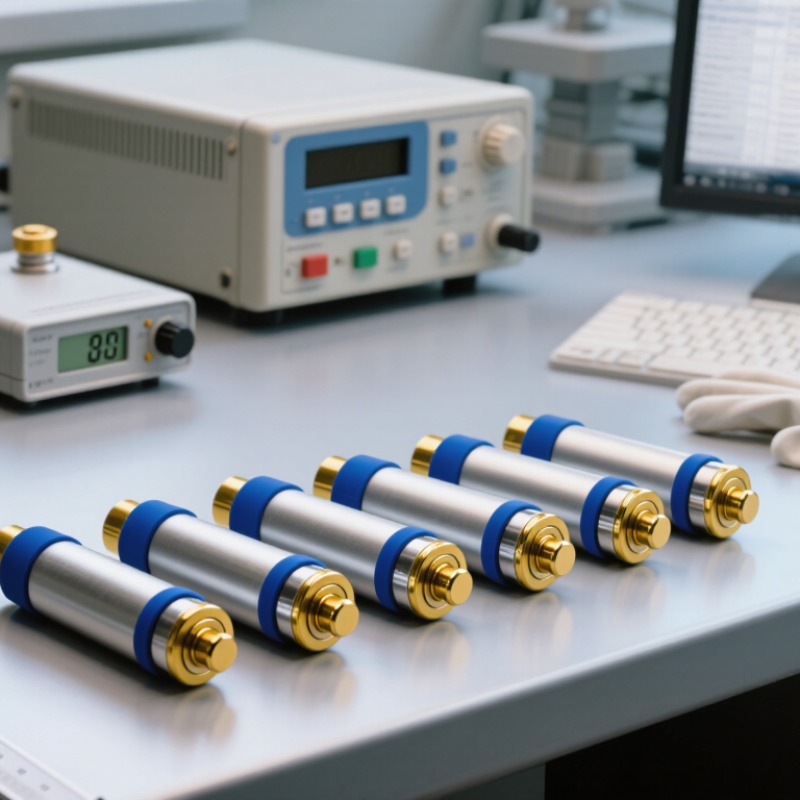
Choosing vape batteries starts with cell type, not price. Common options include integrated lithium-ion packs, 18650 cells, and 21700 cells. Integrated packs simplify handling and reduce incorrect installation. Replaceable cells offer flexibility, but they require stricter inspection and storage procedures.
Capacity is measured in milliamp-hours, or mAh. A higher figure usually supports longer use between charges. It may also increase size and charging time. Voltage affects device output, while the continuous discharge rating indicates how much current a cell can safely deliver. Do not rely on exaggerated labels. Request independent test data and compare it with the supplier’s specification sheet. Small differences matter.
Ask for cell dimensions, operating temperature, cycle life, charging limits, and protection features. A sourcing team should also review UN 38.3 transport testing, safety data sheets, and relevant IEC documentation. Requirements differ by destination. Check them before placing an order. In practical inspections, damaged wraps, loose terminals, and inconsistent batch markings deserve immediate rejection. Never mix unmatched cells. Never use a swollen or dented battery.
I once focused too heavily on capacity. That was a mistake. The better choice balanced discharge performance, traceability, packaging quality, and after-sales support. Sample testing should include charging, discharging, temperature monitoring, and repeated-cycle checks. Results can change between batches. Keep that uncertainty visible in your purchasing records.
When sourcing vape batteries, match the chemistry to the device’s electrical design, not merely its size. Lithium-ion cells with nickel-manganese-cobalt chemistry offer high energy density and strong output. They suit compact devices when the manufacturer designs suitable protection systems. Lithium iron phosphate cells provide excellent thermal stability and long cycle life, but their lower nominal voltage may require different circuitry. Chemistry comes first.
Review the device’s operating voltage, resistance range, maximum current, charging method, and temperature limits. A battery rated for 20 amps continuously is more useful than one advertising an inflated pulse figure. Check whether the device includes overcharge, over-discharge, short-circuit, and thermal protection. Do not guess. Ask suppliers for datasheets, test reports, traceability records, and transport documentation, including UN 38.3 evidence where applicable.
In practical sourcing work, I compare the battery’s continuous discharge rating with the device’s highest expected load, leaving a conservative margin. I also inspect the cell wrapper, terminal condition, batch code, and packaging before approval. A perfect specification can still fail if storage conditions are poor. Keep batteries protected from heat, moisture, and loose metal objects during handling. Capacity figures may vary between testing methods, so request the exact test conditions. Some suppliers dislike detailed questions. That is not a reason to skip them. Temperature behavior, aging, and charging time deserve attention, even when the first samples perform well.
| Battery Chemistry | Typical Nominal Voltage | Maximum Charge Voltage | Typical Energy Density | Discharge Capability | Thermal Stability | Best-Matched Device Type | Key Sourcing Considerations | Suitability |
|---|---|---|---|---|---|---|---|---|
| Lithium-ion NMC / NCA | 3.6–3.7 V per cell | 4.20 V per cell | Approximately 150–250 Wh/kg | Medium to high; dependent on cell design and temperature | Moderate; requires protection against overcharge, over-discharge, short circuit, and overheating | Compact rechargeable devices requiring a balance between capacity, size, and power output | Confirm the continuous discharge rating, cell matching, protection circuit settings, charging profile, and mechanical retention. Avoid relying only on peak discharge figures. | Recommended for correctly engineered rechargeable devices |
| Lithium-ion INR / High-Power NMC | 3.6–3.7 V per cell | 4.20 V per cell | Approximately 150–230 Wh/kg | High; commonly selected for higher-current applications | Moderate; high-current use increases heat generation and requires careful thermal design | Higher-power devices with verified current limits, suitable wiring, and robust protection electronics | Match the battery's continuous current rating to the device's regulated power demand. Include temperature monitoring where appropriate and validate performance under worst-case conditions. | Recommended when high-current performance is genuinely required |
| Lithium-ion IMR / Lithium Manganese Oxide | Approximately 3.7 V per cell | 4.20 V per cell | Approximately 100–150 Wh/kg | High; generally lower capacity than many NMC-based cells | Generally better thermal stability than higher-energy nickel-rich chemistries | Devices prioritizing power delivery and thermal robustness over maximum operating time | Verify the actual continuous discharge rating, operating temperature range, cell dimensions, and protection requirements. Do not mix cells with different ages or specifications. | Suitable for power-focused designs after validation |
| Lithium-ion LCO / Lithium Cobalt Oxide | Approximately 3.6–3.7 V per cell | 4.20 V per cell | Approximately 150–240 Wh/kg | Low to medium compared with high-power lithium-ion chemistries | Lower thermal stability; more sensitive to abuse and elevated temperature | Low-current applications where compact size and energy density are more important than peak output | Use only with appropriate protection and conservative current limits. It is a poor match for devices that demand sustained high current. | Conditional; generally unsuitable for high-power designs |
| Lithium Iron Phosphate (LFP) | Approximately 3.2–3.3 V per cell | Approximately 3.60–3.65 V per cell | Approximately 90–160 Wh/kg | Medium to high, depending on the cell format | High thermal and chemical stability; lower risk of thermal runaway than many conventional lithium-ion chemistries | Applications where safety, cycle life, and stability are prioritized over compact size | The lower voltage requires a chemistry-specific charger and a compatible device cutoff. Never charge an LFP cell using a standard 4.20 V lithium-ion profile. | Suitable only when the device is specifically designed for LFP voltage limits |
| Lithium Polymer, Pouch Format | Approximately 3.7 V per cell | 4.20 V per cell | Approximately 130–250 Wh/kg | Ranges from low to very high according to the electrode design | Moderate; pouch cells require protection from puncture, compression, swelling, and overheating | Thin or custom-shaped devices with an integrated battery compartment | Specify pouch dimensions, tab configuration, protection circuit, swelling tolerance, pack compression, and enclosure clearance. Require controlled assembly and transport packaging. | Recommended for integrated devices with qualified pack engineering |
| Primary Lithium Coin or Cylindrical Cell | Approximately 3.0 V per cell | Not rechargeable | Approximately 200–700 Wh/kg, depending on chemistry and format | Usually low to medium; not intended for repeated high-current pulses unless specifically rated | Good storage stability, but unsafe if subjected to recharge attempts or short circuits | Low-power, single-use electronics that are explicitly designed for non-rechargeable cells | Do not install in a rechargeable device. The product must prevent charging, reverse insertion, overheating, and accidental short circuit. Confirm shipping and disposal requirements. | Not suitable for rechargeable vape devices |
All values are typical engineering ranges and vary by cell format, electrode design, temperature, age, and test method. For global sourcing, verify the manufacturer's current datasheet, safety test documentation, protection-circuit settings, charger compatibility, transport classification, and applicable regional requirements before production. The device's maximum current demand should remain within the battery's verified continuous discharge capability, with an appropriate safety margin.
Safety should guide every battery sourcing decision. I have learned that a low price can hide weak quality controls. Select suppliers that provide current test reports, production records, and clear traceability. Each battery should carry consistent markings and a verifiable batch number.
Look for evidence of IEC 62133-2 testing for rechargeable lithium batteries. UN 38.3 documentation is also important for international transport. Local rules may require additional safety, chemical, or labeling compliance. Check the destination market before placing an order. Do not rely on a certificate image alone. Confirm its scope, issue date, and testing laboratory.
Protection against overcharging, over-discharging, short circuits, and overheating matters. Ask how the supplier checks capacity, internal resistance, and cell consistency. Independent sampling can reveal differences between approved samples and mass production. That gap is easy to miss. Request safety data sheets, inspection records, and corrective-action reports. Review packaging carefully, especially terminal protection and moisture control. A damaged terminal can turn a routine shipment into a serious risk.
Supplier audits should examine worker training, calibration records, storage conditions, and incident handling. Transparent answers are a strong reliability signal. Vague claims are not. I would also compare failure data across several batches, although perfect records are rarely available. That limitation deserves honest attention. Choose documented performance over impressive promises, and keep every compliance record for future reviews.
How to Choose Vape Batteries for Global Sourcing?
Capacity is only one part of battery performance. A cell marked 3,000 mAh may deliver less energy under high-current use. Battery University’s BU-808 technical review reports that many lithium-ion cells reach about 300–500 full cycles before capacity falls near 80%. That figure changes with heat, charging speed, storage conditions, and discharge depth. Ask suppliers for measured capacity at a stated test current, not only catalogue values. A practical check includes weighing samples, recording voltage, and repeating discharge tests at room temperature.
Power output needs stricter attention. Use continuous discharge current, rather than attractive pulse ratings, when comparing suppliers. The basic relationship is simple: power equals voltage multiplied by current. A 3.7-volt cell delivering 10 amps produces roughly 37 watts before system losses. However, internal resistance can create heat and voltage sag. IEC 61960-3 provides test methods for rechargeable lithium cells, while UN 38.3 documentation supports transport compliance. Request current curves, temperature limits, protection settings, and independent laboratory reports.
Lifespan is rarely perfect.
In field testing, a battery may age faster than the datasheet suggests. Heat inside a compact device is easy to underestimate. Require batch-level records, cycle-test conditions, and traceable serial data. Also verify charger compatibility and protection against overcharge, over-discharge, and short circuits. A lower-capacity cell with stable output may perform better than a larger cell with weak quality control. That trade-off deserves review.
Choosing vape batteries for global sourcing requires more than comparing capacity and price. Supplier quality comes first. Request company registration, factory photographs, test reports, and recent production samples. Ask who performs cell matching and final inspection. A reliable supplier should explain voltage limits, protection features, labeling, and storage conditions clearly. Vague answers are warning signs.
Compliance varies by destination. Confirm the battery’s chemistry, safety documentation, transport classification, and required markings before placing an order. Check whether each market requires independent testing, technical files, or specific packaging. Keep certificates linked to batch numbers. Documents can look complete but still be outdated. An internal review by a qualified compliance specialist is worth the cost. Product specifications should match the shipment exactly.
Logistics also affects battery selection. Lithium battery shipments usually need approved packaging, accurate declarations, and trained freight partners. Discuss air and sea options early, especially during peak seasons. Ask suppliers to control terminal voltage and protect contacts against short circuits. Warehouses should avoid heat, moisture, and prolonged storage. A small carton drop can damage insulation. Include sampling inspections before loading, not only after arrival. One practical weakness is relying too heavily on supplier paperwork; physical checks still matter. A clear replacement policy helps when capacity results fall below the agreed tolerance.
Subscribe to our newsletter and receive the latest news and exclusive insights every month. No spam.
LabConsulting GmbH and LC LabService GmbH are Austrian companies which cooperate with over 600 manufacturers and offers a selection of more than 180,000 products and various laboratory product and service solutions for our Labcustomers.
Die LabConsulting GmbH und die LC LabService GmbH sind österreichische Unternehmen, die mit über 600 global verteilten Herstellern zusammenarbeiten und mit einer Auswahl von mehr als 180.000 Produkten und verschiedenen Laborprodukt- und Servicelösungen unseren Parnern im Labor anbieten.
INSTOCK CATALOGOur services
Our services