BlogsBlogs

Explore cutting-edge articles on laboratory products, industry innovations, and research trends with Lab Consulting.

Explore cutting-edge articles on laboratory products, industry innovations, and research trends with Lab Consulting.

How to Choose a Hydraulic Hose Pressure Tester?

Choosing a Hydraulic Hose Pressure Tester is not simply a matter of selecting the highest pressure range. The tester must match the hose assembly, fitting type, test medium, connection method, and required safety controls. A workshop technician may handle a compact 3,000 psi hose, while an industrial maintenance team may inspect assemblies rated above 10,000 psi. These applications demand different gauges, valves, adaptors, and protective enclosures.

Hydraulic consultant Brendan Casey has repeatedly stressed the importance of maintenance discipline, noting, “A hydraulic system is only as reliable as the quality of its maintenance.” That principle applies directly to pressure testing. A reliable tester should provide stable pressure control, a clear gauge, suitable accuracy, and a documented test procedure. Look for a calibrated pressure gauge, a rated test chamber, and fittings that prevent leakage during connection. Small details matter.

Safety comes before speed.

This guide explains how to compare tester specifications, pressure ratings, gauge accuracy, portability, and maintenance requirements. It also considers practical workshop conditions, such as oily gloves, limited bench space, poor lighting, and repeated daily testing. These details are easy to overlook. They should not be.

A tester that looks professional may still be unsuitable for your hose assemblies. Some low-cost models offer impressive pressure numbers but weak valves or unclear calibration records. That is where judgment becomes difficult. The right choice depends on verified performance, not marketing language. Before purchasing, confirm the tester’s maximum working pressure, test procedure, certification documents, replacement parts, and after-sales technical support. A careful decision protects equipment, technicians, and production time.
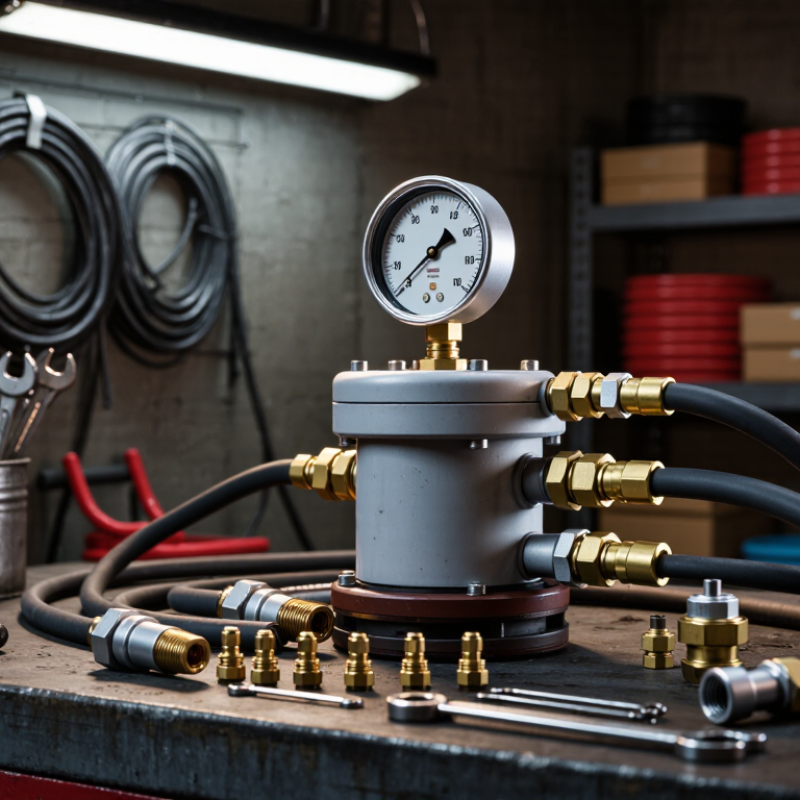
How to Choose a Hydraulic Hose Pressure Tester?

What a Hydraulic Hose Pressure Tester Measures

How to Choose a Hydraulic Hose Pressure Tester?

A hydraulic hose pressure tester measures more than a single pressure reading. It records the pressure applied to an assembly during proof, leak, and burst testing. ISO 19879:2018 describes test methods for hydraulic connections, including pressure holding and leakage inspection. The tester should display stable pressure, pressure loss, and test duration clearly.

Proof pressure matters most during routine quality checks. Many hydraulic hose specifications require proof testing above the maximum working pressure. SAE J517 commonly uses a minimum burst-to-working-pressure ratio of 4:1, although the exact requirement depends on hose construction. A suitable tester must therefore match the hose’s rated pressure range, not merely reach a high number. Too much capacity can reduce reading resolution.

Look closely at pressure decay. A hose may hold pressure briefly, then lose it through a fitting, damaged cover, or trapped air. That small drop is useful evidence. The tester should also support accurate gauges, calibrated sensors, and safe remote operation. A digital display is convenient, but it does not guarantee accuracy. Calibration records remain essential. A clean reading can still mislead if the sensor is overdue for verification. Technicians should record ambient temperature, test medium, pressure level, and holding time. These details make results repeatable, though field conditions are rarely perfect.

Key Factors for Selecting the Right Pressure Tester

Choosing a hydraulic hose pressure tester starts with the hose assembly, not the tester’s display. Check the hose’s rated working pressure, test pressure, fluid type, temperature range, and fitting configuration. A tester rated for 700 bar may still be unsuitable for a hose requiring a different test method.

Accuracy matters more than a large number.

ISO 6803 describes impulse testing for hydraulic hose assemblies, while SAE J517 defines performance requirements for many hydraulic hoses. These standards remind technicians that pressure alone is not enough. The tester should match the applicable hose specification, pressure range, connection type, and test duration. Select a gauge whose normal readings sit near the middle of its scale. That usually improves readability.

A 2024 MarketsandMarkets report estimated the hydraulic hose market could grow at roughly 5% annually through 2028. More equipment means more inspection demand. Look for calibrated sensors, a protective enclosure, leak-resistant adapters, and automatic data recording. Calibration certificates should show traceability and a recent verification date. Without them, a precise-looking reading may be meaningless.

In field inspections, tiny fitting leaks often distort results before the hose actually fails. I would check every connection at low pressure first. A digital screen is useful, but it cannot replace visual inspection. No checklist is perfect. Operators should also consider portability, cleaning requirements, training, and emergency pressure release. A compact tester may be convenient, yet an undersized reservoir can make repeated tests frustrating and inconsistent.

How to Choose a Hydraulic Hose Pressure Tester? - Key Factors for Selecting the Right Pressure Tester

Selection Factor What to Check Practical Guideline Why It Matters
Required Test Pressure The hose assembly's specified proof or test pressure, not only its normal working pressure. Select a tester whose rated maximum pressure is higher than the required test pressure. Follow the applicable hose standard and assembly manufacturer's instructions. A tester designed only for operating pressure may be unsafe or unsuitable for proof testing.
Pressure Range The normal test range and the maximum pressure the instrument can safely withstand. Common selection ranges include:
• 0–250 bar / 0–3,625 psi
• 0–400 bar / 0–5,800 psi
• 0–700 bar / 0–10,150 psi
The range should cover the test pressure while retaining sufficient reading resolution.
Gauge Accuracy Accuracy class, stated error, and whether accuracy is based on full-scale or indicated reading. For general maintenance, ±1% of full scale is commonly suitable. For documented inspection or certification work, consider ±0.5% of full scale or better. A lower full-scale range with suitable accuracy usually provides better readability at the target pressure.
Analog or Digital Display Display readability, resolution, backlighting, battery life, and resistance to shock or moisture. Choose an analog gauge for simple field checks. Choose a digital gauge when precise readings, peak-pressure capture, or data recording are required. The display should remain clear at the working distance and under the expected lighting conditions.
Pressure Holding and Damping Ability to maintain pressure for the required hold period and resist pulsation effects. Use a calibrated shut-off valve, suitable test hose, and a gauge with a snubber or damping feature when pressure pulsation is present. Pressure spikes can damage the gauge, reduce reading stability, and create inaccurate results.
Connection Compatibility Port type, thread standard, size, sealing method, and pressure rating of adapters and couplings. Verify compatibility with the hose assembly, such as metric, BSP, NPT, or other specified connection standards. Use rated adapters only. Incorrect threads or sealing surfaces can cause leakage, cross-threading, or unsafe separation.
Fluid Compatibility Compatibility of seals, wetted parts, and test fluid with the hydraulic medium. Confirm suitability for the actual fluid, such as mineral hydraulic oil, water-glycol fluid, or biodegradable hydraulic fluid. Seal incompatibility can cause swelling, leakage, measurement errors, or premature component failure.
Temperature Capability Permitted ambient and fluid temperature range of the tester, seals, hoses, and fittings. Select components rated for the highest expected test temperature. Allow hot assemblies and fluid to cool when required by the test procedure. Temperature affects seal life, fluid viscosity, pressure stability, and measurement accuracy.
Safety Features Protective case, pressure relief, secure couplings, rated test hose, and controlled pressure release. Use a tester with components rated for the intended pressure and establish a guarded test area. Never disconnect a pressurized connection. Stored hydraulic energy can cause injection injuries, hose whip, and component rupture.
Portability and Installation Weight, mounting method, hose length, access to test points, and field operating conditions. Choose a compact, protected unit for field service and a panel-mounted or bench-mounted unit for repetitive workshop testing. The correct format improves setup time, reduces handling damage, and supports consistent testing.
Data Recording Peak hold, pressure-time recording, date and time stamps, export options, and traceable test records. Basic visual inspection needs only a readable gauge. Quality-control programs may benefit from digital storage or electronic reporting. Recorded data supports repeatability, maintenance history, and audit documentation.
Calibration and Traceability Calibration certificate, reference standard, accuracy statement, and recommended recalibration interval. Use a tester with documented calibration. Recalibrate according to the risk, frequency of use, applicable quality system, and instrument manufacturer's recommendation. Traceable calibration helps demonstrate that test results are reliable and repeatable.
Best-Fit Selection The combination of pressure range, accuracy, connection type, fluid compatibility, and operating environment. For routine service, select a rugged tester covering the required pressure with approximately ±1% full-scale accuracy. For formal verification, select a calibrated unit with improved accuracy and data recording. A balanced specification is safer and more useful than choosing the highest possible pressure range alone.

How to Match Tester Specifications to Hose Requirements

Choosing a hydraulic hose pressure tester starts with the hose, not the machine. Record working pressure, proof pressure, burst pressure, temperature, fluid type, and connection size. SAE J517 and ISO 18752 classify hose performance by pressure, temperature, and application requirements. Their data helps prevent a dangerous mismatch.

The tester’s maximum rating should exceed the required test pressure, while every adapter must carry the same rating. ISO 1402 defines hydrostatic proof and burst testing for hose assemblies. ISO 6803 covers pressure impulse testing, which simulates repeated service shocks. For example, a hose requiring 25 MPa needs a tester rated above 25 MPa, or 250 bar. NIST conversion data confirms that 1 MPa equals 10 bar. Small errors matter.

Accuracy matters too. Choose a calibrated pressure sensor, suitable temperature range, and a readable data logger. Confirm fluid compatibility before testing. Water-based testing may not represent oil behavior. Inspect seals and fittings before every cycle. A weak adapter can fail first. That result may mislead you. In field work, I have seen specifications copied from old hose records without checking current ratings. That shortcut is easy, but it is not reliable. Recheck the lowest-rated component, and document calibration dates, test pressure, holding time, and test temperature.

Essential Features for Accurate and Safe Pressure Testing

How to Choose a Hydraulic Hose Pressure Tester?

Accurate pressure testing starts with the tester’s pressure range. Choose a model rated above the system’s expected maximum, but avoid excessive overcapacity that reduces resolution. A clear gauge, fine scale markings, and stable needle movement make small pressure changes easier to notice. Digital displays can improve readability, especially in dim workshops. However, a digital display is not automatically better. Battery condition, screen glare, and sensor drift still matter. Look for documented accuracy, repeatability, and a current calibration certificate from a competent laboratory.

Safety features deserve equal attention. A pressure relief valve can reduce trapped pressure before disconnecting the tester. Strong protective housing helps shield the gauge from impact and hose movement. Check that the fittings match the hose assembly and are rated for the intended pressure and fluid. Mismatched threads can leak or fail suddenly. Use a tester with secure couplings, suitable seals, and an easy-to-operate isolation valve. Keep your hands away from connection points during testing.

Before each test, inspect the hose, clean the fittings, and confirm the gauge returns to zero. Increase pressure gradually, then hold it long enough to observe fluctuations. Record the starting pressure, test duration, temperature, and final reading. These details support reliable maintenance decisions. In practical inspections, even a well-designed tester can produce questionable results when the hose is poorly mounted. I have found that simple positioning errors are easy to overlook. Recheck the setup. Safety glasses, guarded test areas, and controlled pressure release remain essential.

How to Choose a Hydraulic Hose Pressure Tester?

Essential features include sufficient pressure range, clear measurement resolution, reliable accuracy, and a safety margin above the required proof-test pressure.

The chart uses a 1.5× proof-test example: proof pressure is calculated as 1.5 times the hose maximum working pressure, consistent with commonly specified hydraulic hose proof-testing practice. Select a tester whose rated range covers the required proof pressure without operating at its maximum limit. Always verify the applicable hose standard and assembly specification before testing.

How to Use and Maintain a Hydraulic Hose Pressure Tester

Choosing a hydraulic hose pressure tester starts with the hose’s rated working pressure, test pressure, and connection type. Use a tester whose gauge range keeps normal readings near the middle, not at the final graduation. Before testing, isolate the circuit, release stored pressure, and confirm fluid compatibility with the seals. Bleed trapped air carefully. Secure the hose behind a shield, then raise pressure slowly from a remote position. Never exceed the approved proof-test value; ISO 1402 provides a recognized framework for hydraulic hose testing. The U.S. Bureau of Labor Statistics reported 2.6 million nonfatal workplace injuries in private industry during 2023. The figure covers all causes, not hoses alone. Still, it shows why disciplined testing matters.

After each session, inspect the gauge, couplers, O-rings, and relief valve for leakage, corrosion, or sluggish movement. Wipe away oil before storage; contamination can hide cracks and damage seals. Store the tester dry, capped, and protected from temperature extremes. Record the serial number, date, pressure reached, fluid used, and operator. Have the gauge calibrated at a documented interval based on use and risk, rather than trusting a faded sticker. ISO 4413 emphasizes energy isolation and maintenance controls. The UK Health and Safety Executive recorded 604,000 nonfatal workplace injuries in 2023/24. Those reports are not hose-specific, but they reinforce careful procedures. I have seen accurate gauges paired with worn couplers. That small oversight can invalidate a careful test. Review the procedure after every abnormal reading.

Newsletter

Subscribe to our newsletter and receive the latest news and exclusive insights every month. No spam.