BlogsBlogs

Explore cutting-edge articles on laboratory products, industry innovations, and research trends with Lab Consulting.

Explore cutting-edge articles on laboratory products, industry innovations, and research trends with Lab Consulting.

How to Choose the Best Scientific Supplies for Your Experiments?

Choosing the right scientific supplies can greatly impact the success of your experiments. According to recent industry reports, over 70% of research failures stem from inadequate materials. Selecting high-quality scientific supplies is essential for accurate results and efficiency.

When evaluating scientific supplies, consider factors like purity, consistency, and reliability. Common mistakes include overlooking supplier credibility and failing to check product specifications. Each choice can directly influence experiment outcomes, emphasizing the need for diligence.

In the fast-paced world of research, even minor missteps can lead to significant setbacks. Keeping abreast of the latest advancements in scientific supplies can help mitigate these risks. Engaging with supplier reviews and product testing data is vital. Ultimately, making informed decisions on supplies could be the difference between success and failure in your scientific endeavors.

How to Choose the Best Scientific Supplies for Your Experiments?

Identifying the Key Requirements for Your Scientific Experiments

When conducting scientific experiments, identifying key requirements is crucial. Start by defining your objective clearly. What are you trying to discover? This clarity informs your choice of tools and materials. Consider the type of experiment you are executing. Are you doing qualitative analysis or quantitative measurements?

Next, evaluate the necessary supplies. Will you need glassware, reagents, or specialized equipment? Ensure everything is in good working condition. Some experienced researchers overlook minor details, like cleaning their tools. Small residues can skew results. Safety should always be a priority. Always check for appropriate safety gear before starting an experiment. Mistakes in this area can lead to serious consequences.

Documentation is another key element. Keep a lab notebook to track your procedures and findings. This practice helps you reflect on what worked and what didn’t. Some researchers find this step tedious but valuable. Over time, well-documented experiments can lead to new insights. Remember, experimenting is not just about success; it’s about learning from failures too.
Scientific Supplies Usage in Experiments

This chart illustrates the average frequency of usage of various scientific supplies in experiments. Beakers and test tubes are the most commonly used items in laboratory settings, reflecting their importance in various types of experiments.

Evaluating Different Types of Scientific Supplies Available

How to Choose the Best Scientific Supplies for Your Experiments?

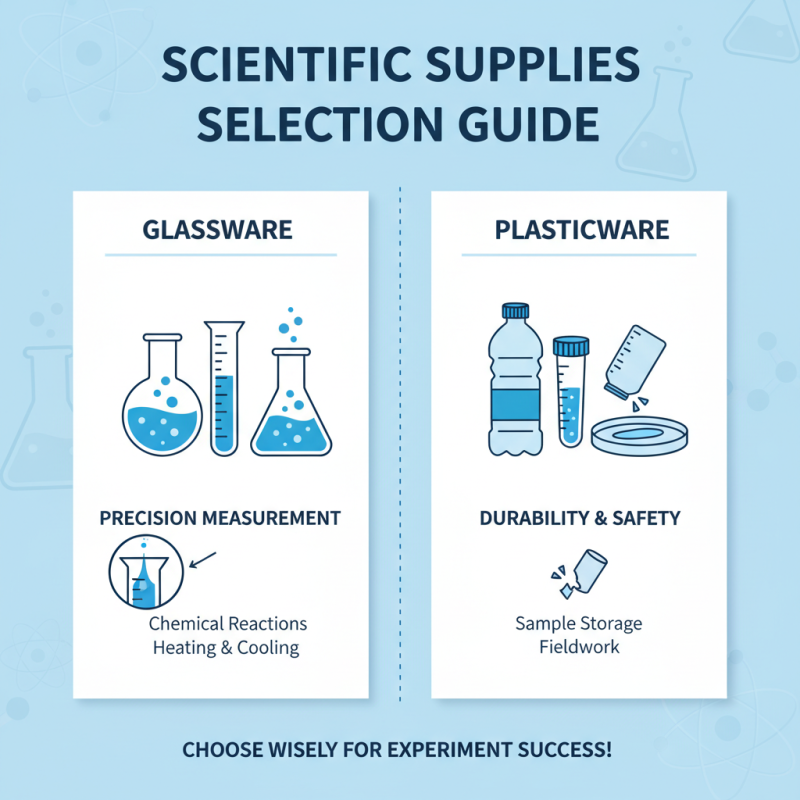
When selecting scientific supplies for experiments, understanding the various types available is crucial. Different experiments require distinct materials. For instance, glassware is ideal for precise measurements, while plastic containers may offer better durability for certain applications.

Quality often varies even among similar supplies. It's important to assess the materials used in production. Some plastic lab ware can leach chemicals if subjected to heat. Meanwhile, certain glassware might be unsuitable for all types of liquids. Evaluating your specific needs can guide you in making the right choice.

Don't overlook the importance of safety equipment. Gloves and goggles are critical for protecting yourself. However, not all gloves are suited for every chemical. Testing their effectiveness beforehand is often necessary. This process can be trial and error, with occasional mishaps. Experimentation may lead to unexpected results, prompting reflection on your choices. This aspect of scientific exploration is essential for growth and learning.

Assessing Quality and Reliability of Scientific Equipment

How to Choose the Best Scientific Supplies for Your Experiments?

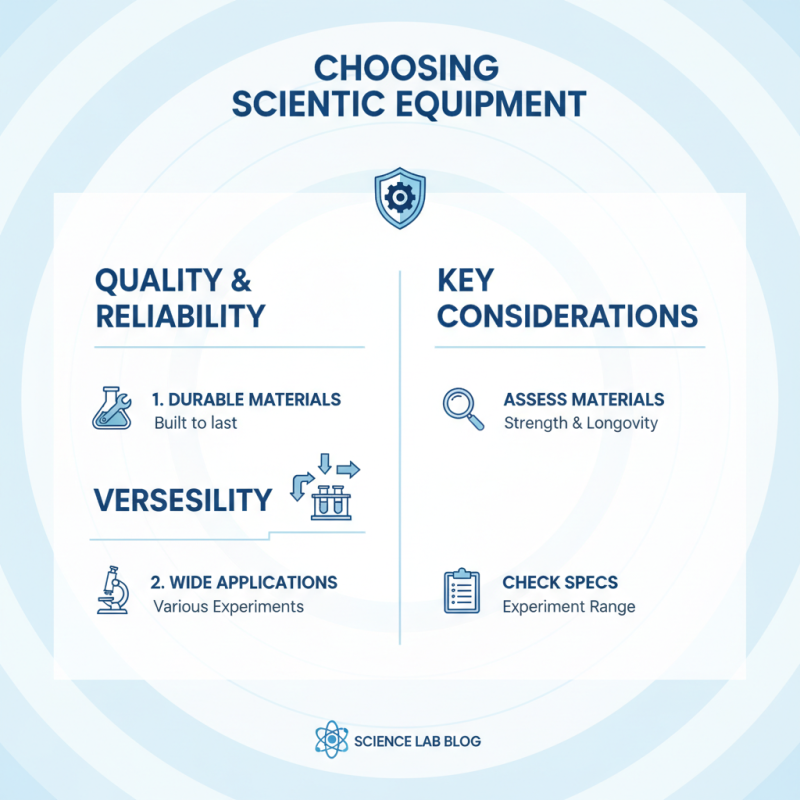
When choosing scientific equipment, quality and reliability are paramount. First, assess the materials used in the equipment. Durable materials can withstand repeated use. Check for specifications detailing the range of applications. This will ensure that the equipment is versatile enough for various experiments.

Next, consider user reviews and experiences. What do researchers say about the equipment's performance? Are there common issues reported? This feedback can highlight durability concerns or usability problems that aren't apparent in product descriptions.

It’s also valuable to test the equipment in a smaller capacity before fully committing. A pilot experiment could reveal unexpected flaws. Take note of how the equipment performs under stress or in less-than-ideal conditions. Reflecting on these experiences can illuminate areas for improvement and better inform future purchases.

Understanding Budget Constraints and Cost-Effectiveness

When selecting scientific supplies, budget constraints play a crucial role. Research indicates that 30% of research projects exceed their budgets due to unplanned expenses. This often stems from purchasing high-cost supplies that do not yield proportional results. Balancing cost and quality is essential for effective experimentation.

Cost-effectiveness can be achieved by comparing product prices and functionalities. For example, some high-end pipettes can cost three times more than standard models. However, they may not significantly increase accuracy. Data shows that roughly 42% of scientists feel pressured to minimize costs without compromising quality. This pressure can lead to splitting orders among different suppliers to access better prices, yet it complicates the ordering process.

It's essential to thoroughly evaluate which items are crucial for your experiments. Investing in versatile tools can often save money in the long run. A study found that researchers who standardized their toolkit saw up to 25% reduction in material costs. A careful approach can highlight areas needing improvement, ultimately leading to more successful outcomes.

How to Choose the Best Scientific Supplies for Your Experiments? - Understanding Budget Constraints and Cost-Effectiveness

Item Category Average Cost ($) Durability (Months) Cost-Effectiveness Rating
Test Tubes Glassware 15 24 4.5
Bunsen Burner Heating 30 36 4.0
Microscope Optics 200 60 3.8
Pipettes Liquid Handling 20 12 4.2
Reagent Kits Chemicals 50 24 4.7

Exploring Supplier Reputation and Customer Reviews

When selecting scientific supplies for experiments, the reputation of your supplier matters. Investigating supplier credibility can save you from future headaches. A trusted supplier often reflects quality and reliability.

Checking for industry experience is key. Suppliers with a long track record are often more dependable.

Customer reviews are a treasure trove of information. They reveal the experiences of other scientists. Look for detailed reviews that discuss specific products. Positive feedback on product quality is encouraging. But be cautious. Some reviews may be overly optimistic or biased. A mix of good and bad reviews provides a clearer picture.

Pay attention to the complaints as well. If multiple customers mention the same issue, take it seriously. Transparency is vital. Suppliers that respond to negative feedback show commitment to improvement. This can influence your decision. Aim to choose supplies that enhance your experiments. It's essential to blend reputation and real user experiences for the best outcomes.

Newsletter

Subscribe to our newsletter and receive the latest news and exclusive insights every month. No spam.