Explore cutting-edge articles on laboratory products, industry innovations, and research trends with Lab Consulting.
Choosing the 2026 best Impulse Voltage Generator requires more than comparing peak voltage and purchase price. Global buyers need dependable wave-shape control, repeatable testing, safe operation, and practical technical support. A polished brochure cannot replace a stable 1.2/50 μs waveform, accurate measurement, and documented calibration.
High-voltage engineering specialist Professor Juan A. Martinez-Velasco emphasizes, “Transient testing must connect theoretical models with measurable equipment behavior.” That principle matters when evaluating generators for transformers, cables, insulators, switchgear, and research laboratories. A reliable system should deliver the specified impulse repeatedly, even when humidity, grounding, or operator experience changes.
Small details matter.
Look for a low-inductance discharge circuit, clear charging controls, suitable voltage dividers, and synchronized recording equipment. Confirm whether the supplier explains front-time adjustment, tail-time control, energy capacity, and emergency discharge procedures. Global purchasers should also review installation requirements, service response, spare-part availability, factory testing, and conformity documentation for their destination market.
The strongest choice is rarely the largest machine. It is the generator that matches the test object, laboratory space, operating voltage, and long-term workload. Some product comparisons overlook maintenance time and operator training. That is a weakness worth admitting. A technically impressive generator may still disappoint if software is confusing or replacement parts arrive slowly.
This 2026 guide examines leading options through performance, safety, usability, measurement confidence, and lifecycle value. It also considers where specifications appear impressive but practical evidence remains limited. Reliable decisions need both engineering data and honest doubt.
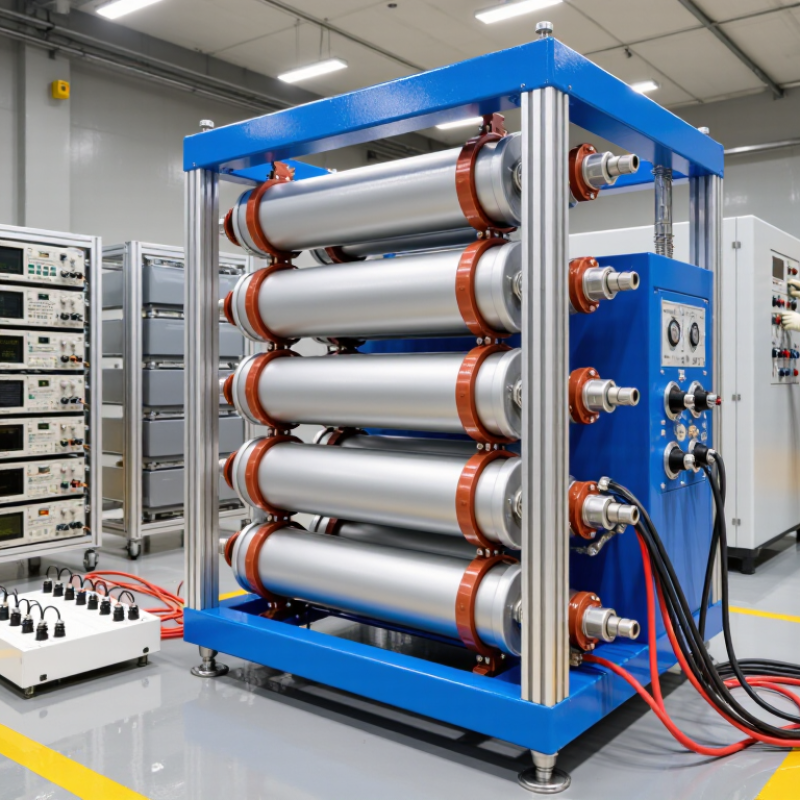
Impulse voltage generators recreate the sharp electrical stress caused by lightning and switching events. Lightning impulses commonly use a 1.2/50 microsecond waveform. Switching impulses rise more slowly and may follow a 250/2500 microsecond pattern. These tests reveal insulation weaknesses before equipment enters service.
A suitable generator must match the test object, voltage level, energy requirement, and laboratory space. For example, a dry-type transformer needs different charging energy from a cable termination. I always check waveform control, resistor adjustment, measurement accuracy, and discharge safety. A compact cabinet may look attractive, but limited clearance can restrict future testing. That detail is easy to miss.
Reliable systems should support traceable measurements and repeatable results. Digital records help compare front-time, peak voltage, and tail-time changes across tests. Guidance from IEC 60060-1 and IEEE 4 can support a consistent procedure. Environmental conditions also matter. Humidity, altitude, and grounding can alter results. During one setup, a loose grounding connection produced a suspicious waveform. The generator was not at fault. Our assumption was. Experienced engineers inspect connections before changing settings, although even careful teams sometimes overlook a simple cable. For global buyers, clear manuals, calibration support, local training, and accessible replacement components can matter as much as maximum voltage.
2026 Best Impulse Voltage Generator for Global Buyers?
IEC 60060-1 identifies the 1.2/50 μs waveform as the standard lightning impulse. Its 1.2 μs front simulates a rapid surge, while 50 μs indicates decay to half-value. The 250/2500 μs waveform represents switching impulses, with a slower front and longer energy duration. These values are defined test parameters, not marketing claims.
A reliable generator should reproduce both waveforms under controlled load conditions. IEC 60060-1:2010 requires laboratories to measure peak voltage, front time, and time to half-value. IEC 60071-1:2019 links these impulse classes with insulation coordination studies. CIGRE Technical Brochure 549 also highlights the importance of repeatable impulse testing for high-voltage equipment.
In practical testing, resistor selection changes the waveform sharply. A small adjustment can move the front time outside tolerance. That is where experience matters. Check the oscilloscope trace, not only the generator display. A 1.2/50 μs pulse may look correct at low voltage but distort near full charge. The 250/2500 μs pulse is even more sensitive to test-object capacitance and grounding.
Real laboratories still face imperfect results. Humidity, stray inductance, and aging capacitors can affect repeatability. It is easy to overlook grounding. That mistake is costly. Buyers should request calibration records, waveform data, energy ratings, and load-specific test evidence before selecting a 2026 impulse voltage generator.
2026 Best Impulse Voltage Generator for Global Buyers?
When evaluating an impulse voltage generator, output voltage is only the starting point. The selected range must match the insulation level under test. Excessive voltage can damage samples and distort laboratory results. Energy matters just as much. Stored energy depends on capacitance and voltage, so small voltage increases can create large energy changes.
Front time controls how quickly the impulse rises. A sharp front may reveal insulation weaknesses that slower pulses miss. Check the generator’s waveform adjustment range, not only its maximum rating. Also review measurement bandwidth and calibration records. Without reliable instruments, a precise-looking waveform can still be misleading. Tolerance should cover voltage, energy, front time, and tail time. Ask whether the stated tolerance includes measurement uncertainty and temperature changes. This detail is often overlooked.
Tips: Request recent test data before comparing suppliers. Confirm operating conditions, including humidity, altitude, and ambient temperature. Inspect the charging system, emergency discharge function, and enclosure design. These practical details affect daily reliability. A strong specification sheet does not guarantee smooth testing. In real evaluations, setup time and waveform repeatability often matter more than impressive peak voltage. I would also leave some margin between the generator’s limits and your routine test requirements. That choice may seem conservative, but it reduces stress on the equipment. One limitation remains: published values can change with load conditions, so verify performance using your actual test arrangement.
| Generator Class | Typical Peak Output Voltage | Typical Stored Energy | Typical Charging Voltage | Standard Impulse Waveform | Front Time | Front-Time Tolerance | Peak-Voltage Setting Tolerance | Typical Applications |
|---|---|---|---|---|---|---|---|---|
| Portable Component Class | 50–100 kV | 0.2–1 kJ | 10–25 kV per stage | Lightning impulse, 1.2/50 μs | 1.2 μs nominal | ±30% | Typically ±3% | Small insulation samples, capacitors, sensors, and laboratory demonstrations |
| General Laboratory Class | 100–200 kV | 1–5 kJ | 15–30 kV per stage | Lightning impulse, 1.2/50 μs | 1.2 μs nominal | ±30% | Typically ±3% | Low-voltage equipment, bushings, cable accessories, and research laboratories |
| Medium-Power Test Class | 200–400 kV | 5–20 kJ | 20–40 kV per stage | Lightning impulse, 1.2/50 μs | 1.2 μs nominal | ±30% | Typically ±3% | Medium-voltage transformers, switchgear, insulators, and cable systems |
| High-Voltage Utility Class | 400–800 kV | 20–60 kJ | 25–50 kV per stage | Lightning impulse, 1.2/50 μs | 1.2 μs nominal | ±30% | Typically ±3% | Power transformers, high-voltage switchgear, overhead-line hardware, and utility insulation systems |
| Extra-High-Voltage Class | 800–1,200 kV | 60–150 kJ | 30–60 kV per stage | Lightning impulse, 1.2/50 μs | 1.2 μs nominal | ±30% | Typically ±3% | Extra-high-voltage equipment, large transformer assemblies, long insulator strings, and transmission-line studies |
Choosing the best impulse voltage generator in 2026 depends on certification alignment, not peak output alone. IEC 60060-1 specifies the 1.2/50 μs lightning impulse waveform, with typical tolerances of ±3% for peak value and ±10% for timing parameters. These figures should appear in factory reports, calibration records, and acceptance tests.
IEEE Std 4-2013 offers a comparable measurement framework, but laboratories may interpret setup, grounding, and uncertainty differently. A global buyer should request traceable calibration under ISO/IEC 17025. Regional compliance also matters. European installations may require Low Voltage and EMC Directive conformity. North American projects often request evaluation by an accredited NRTL. Chinese projects can involve GB/T alignment and CCC-related documentation, depending on the equipment category.
Industry data supports stricter verification. The International Energy Agency’s Electricity 2024 report projects global electricity demand growth of about 4% in 2024, driven by cooling, industry, and electrification. More energized infrastructure means more acceptance testing. In practice, a generator with a 300 kV rating can still fail a tender if its waveform report lacks uncertainty data or regional documentation.
One detail is often underestimated: room layout. A long return conductor can distort the front time and create misleading results. I have seen technically impressive specifications become weak test evidence. Buyers should compare measured waveforms, calibration intervals, safety interlocks, and service response, rather than brochure voltage alone. The paperwork may decide the purchase.
For global buyers, selecting an impulse voltage generator is less about peak output than controlled, repeatable testing. Safety should be visible in the hardware, not hidden in a manual. Look for interlocked doors, discharge indicators, emergency stops, grounded enclosures, and clear warning labels. The control system should prevent charging when access panels remain open. Ask for documented risk assessments and test procedures. Small omissions matter. During equipment reviews, I check cable routing, insulation distances, and the condition of discharge resistors. These details reveal whether safety was engineered or merely advertised. A perfect specification sheet can mislead.
Calibration deserves equal attention in 2026 purchasing decisions. Request traceable certificates, stated uncertainties, and a practical recalibration schedule. The generator should maintain stable wave shapes across the intended voltage range. Independent verification is useful when results affect product certification or factory release. Automation can reduce operator error through recipe control, automatic charging, waveform capture, and event logging. Records matter. Operators still need training, editable limits, and a safe manual override. After-sales support should include spare-parts guidance, remote diagnostics, response times, and local service capacity. Ask who handles failures after installation. I have seen buyers overlook software updates and calibration costs. That mistake becomes expensive. Compare total ownership cost, not only the quotation.
Recommended procurement weighting for global buyers
This transparent scoring model prioritizes electrical and operator safety, traceable calibration, automated test control, and dependable after-sales support. Buyers should verify compliance with applicable requirements such as IEC 60060-1 for high-voltage test techniques, IEC 61010-1 for laboratory equipment safety where applicable, and ISO/IEC 17025 traceability for calibration services. The percentages are recommended evaluation weights, not market-share data.
Subscribe to our newsletter and receive the latest news and exclusive insights every month. No spam.
LabConsulting GmbH and LC LabService GmbH are Austrian companies which cooperate with over 600 manufacturers and offers a selection of more than 180,000 products and various laboratory product and service solutions for our Labcustomers.
Die LabConsulting GmbH und die LC LabService GmbH sind österreichische Unternehmen, die mit über 600 global verteilten Herstellern zusammenarbeiten und mit einer Auswahl von mehr als 180.000 Produkten und verschiedenen Laborprodukt- und Servicelösungen unseren Parnern im Labor anbieten.
INSTOCK CATALOGOur services
Our services