


2026 Top Types of Laboratory Cabinets for Global Buyers
Choosing the right laboratory cabinets is a practical decision with long-term safety, workflow, and cost consequences. In 2026, global buyers will face more choices than ever, including base cabinets, wall cabinets, tall storage units, ventilated cabinets, flammable-liquid cabinets, acid cabinets, and mobile models. Each type serves a different purpose. A cabinet holding glassware cannot replace one designed for corrosive chemicals. It sounds obvious. Yet purchasing mistakes still happen.
James A. Kaufman, founder of the Laboratory Safety Institute, said, “Safety is not expensive, it’s priceless.” His words remain relevant when buyers compare cabinet prices without examining construction, ventilation, fire resistance, load capacity, or maintenance access. A quality laboratory cabinets selection should reflect the laboratory’s chemicals, equipment, room layout, user habits, and emergency procedures. Stainless steel may suit humid environments. Polypropylene can offer stronger resistance to certain corrosive substances. Lockable designs may support controlled access. Ventilated units can help manage hazardous vapors, but they must connect correctly to the building’s ventilation system.
This guide explores the top types of laboratory cabinets for global buyers in 2026. It also considers material performance, storage capacity, ergonomic details, documentation, and regional compliance expectations. Standards differ between countries. Buyers should confirm requirements with qualified safety professionals and local authorities. No cabinet solves poor chemical management. That uncomfortable point deserves attention. A well-built unit can still fail when overloaded, poorly labeled, or used for incompatible substances. The best choice is not always the most expensive one. It is the cabinet that fits real laboratory behavior, verified safety needs, and future expansion.
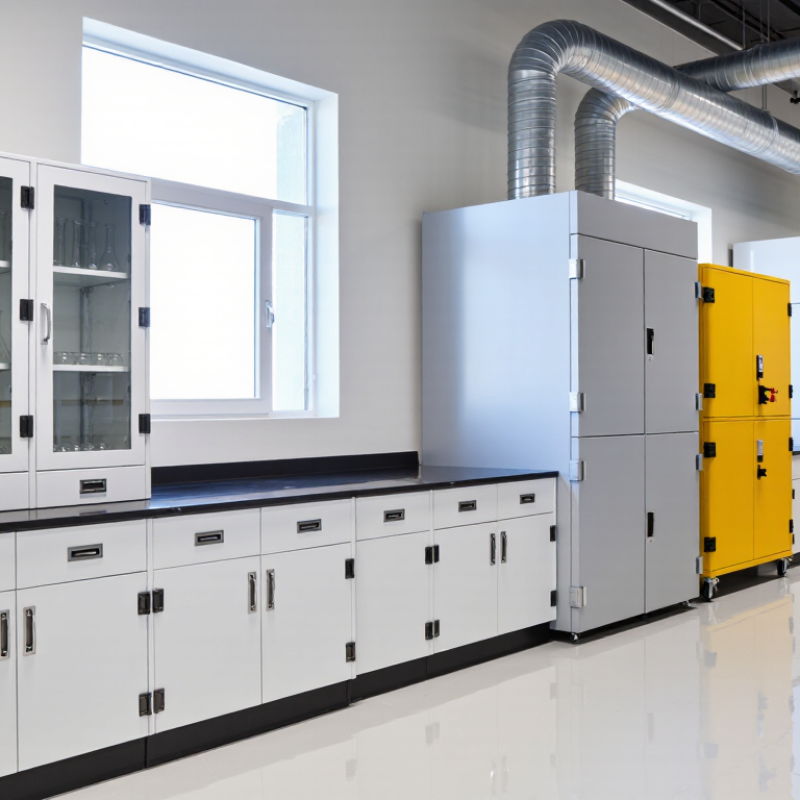
What Laboratory Cabinets Are and Why They Matter in 2026
2026 Top Types of Laboratory Cabinets for Global Buyers
What Laboratory Cabinets Are and Why They Matter in 2026
Laboratory cabinets are engineered storage and work enclosures for chemicals, samples, instruments, and protective equipment. They are not ordinary cupboards. Their materials, seals, ventilation, and load ratings support safer daily procedures.
Common types include chemical storage cabinets, flammable-liquid cabinets, acid cabinets, laboratory base cabinets, and ventilated enclosures. Each design addresses a different risk. For example, corrosion-resistant surfaces help protect against aggressive substances. Adjustable shelving improves access and reduces unstable stacking. Some cabinets also support controlled ventilation, which may limit harmful vapor accumulation.
In 2026, global buyers should evaluate more than appearance or price. A cabinet must match the laboratory’s substances, room conditions, workflow, and local safety requirements. Check fire performance, chemical compatibility, hinges, locking systems, and replacement parts. Ask for documented test results and clear installation instructions. Do not rely on vague claims.
Small details matter.
A door that closes poorly can weaken containment. A shelf that bends under real loads creates another problem. Maintenance access is often overlooked, especially in crowded laboratories. Buyers should also confirm language support, delivery conditions, and service availability across regions.
The ideal cabinet is not always the most advanced model. It is the one that fits actual procedures and is maintained correctly. That point is easy to miss. Even a well-designed cabinet cannot compensate for poor labeling, overloading, or careless inspection. Teams should review their storage habits regularly and adjust specifications when risks change.
2026 Top Types of Laboratory Cabinets for Global Buyers - What Laboratory Cabinets Are and Why They Matter in 2026
| Cabinet Type | Primary Function | Typical Applications | Airflow or Protection Principle | Common Construction Materials | Typical Working Width | Key Safety Considerations | Relevant Standards or Guidance | 2026 Buyer Priorities |
|---|---|---|---|---|---|---|---|---|
| Chemical Fume Hood | Captures and exhausts hazardous chemical vapors, gases, aerosols, and odors. | Synthetic chemistry, solvent handling, acid digestion, analytical testing, and teaching laboratories. | Local exhaust ventilation draws contaminated air away from the operator and discharges it through a suitable exhaust system. | Powder-coated steel, stainless steel, chemical-resistant compact laminate, epoxy resin, or ceramic work surfaces. | 900–2400 mm | Requires suitable exhaust design, airflow verification, sash management, chemical compatibility review, and regular performance testing. | ANSI/ASHRAE 110; EN 14175; local laboratory ventilation and occupational-safety requirements. | Variable-air-volume control, energy reduction, airflow alarms, low-noise operation, remote monitoring, and ergonomic sash design. |
| Ductless Fume Cabinet | Provides localized containment while filtering selected contaminants before returning air to the room. | Small-scale solvent work, powder handling, educational laboratories, and locations where external ducting is impractical. | A fan pulls air through application-specific filters, commonly activated carbon and/or particulate filters. | Coated steel, polypropylene, chemical-resistant laminate, polycarbonate, and laminated safety glass. | 600–1800 mm | Not suitable for every chemical or unknown mixture; filter selection, saturation monitoring, replacement intervals, and compatibility must be validated. | Relevant local ventilation guidance, chemical exposure limits, electrical safety rules, and manufacturer filter-validation data. | Filter-life sensors, transparent filter status, reduced installation requirements, low energy use, and application-specific filtration. |
| Biological Safety Cabinet, Class I | Protects personnel and the environment from biological aerosols generated during microbiological procedures. | Work involving low- to moderate-risk biological materials when product protection is not required. | Inward airflow protects the operator; exhaust air passes through high-efficiency particulate filtration. | Powder-coated steel, stainless steel work surfaces, laminated safety glass, and sealed internal panels. | 900–1800 mm | Does not provide product protection; correct installation, certification, filter integrity, and airflow testing are essential. | NSF/ANSI 49; EN 12469; applicable biosafety and facility requirements. | Digital airflow display, easier decontamination, lower noise, energy-efficient motors, and certification traceability. |
| Biological Safety Cabinet, Class II | Provides personnel, product, and environmental protection for many microbiological and cell-culture procedures. | Cell culture, clinical microbiology, molecular biology, tissue culture, and work with potentially infectious materials. | Vertical unidirectional HEPA-filtered supply airflow protects the product, while inward airflow protects the operator. | Stainless steel interior, coated steel exterior, safety glass sash, and sealed work zone. | 900–1800 mm | Avoid open flames unless specifically permitted; maintain front-grille clearance and certify airflow and filter performance periodically. | NSF/ANSI 49; EN 12469; institutional biosafety procedures. | Energy-efficient EC fans, occupancy-based controls, low-vibration work zones, digital certification records, and ergonomic access. |
| PCR Workstation or Clean Bench | Reduces contamination of clean materials and samples during sensitive procedures. | PCR preparation, reagent setup, sterile assembly, and non-hazardous sample preparation. | HEPA-filtered horizontal or vertical airflow protects the work area; it generally does not protect the operator from hazardous aerosols. | Stainless steel or coated steel, acrylic or glass side panels, and smooth cleanable surfaces. | 600–1500 mm | Should not be used for infectious, toxic, volatile, or biohazardous procedures requiring personnel protection. | Applicable clean-air, electrical-safety, laboratory-quality, and contamination-control procedures. | Separate clean and dirty workflows, easy disinfection, UV use only as a supplementary measure, and compact installation. |
| Powder-Weighing Enclosure | Controls dust and airborne particles generated while weighing or transferring powders. | Pharmaceutical research, formulation, toxicology, food analysis, and fine-powder handling. | Localized inward airflow captures particles at the weighing zone and directs them toward filtration or exhaust. | Stainless steel, powder-coated steel, chemical-resistant worktops, and transparent viewing panels. | 900–1800 mm | Assess powder toxicity, combustible-dust risk, static control, filter loading, cleaning methods, and cross-contamination risk. | Applicable local dust-control, hazardous-area, occupational-exposure, and laboratory ventilation requirements. | Low-turbulence airflow, balance-friendly design, antistatic options, easy-clean interiors, and validated containment performance. |
| Radioisotope Workstation | Provides containment for low-level radioactive material handling and reduces airborne contamination. | Radiochemistry, tracer studies, nuclear medicine research, and controlled isotope preparation. | Negative-pressure enclosure with dedicated exhaust and, where required, particulate or specialized filtration. | Stainless steel, lead-lined or shielded panels where specified by the radiation assessment, and chemical-resistant surfaces. | 900–1800 mm | Radiation shielding must be designed from isotope, activity, geometry, and occupancy data; contamination control and regulatory approval are required. | National radiation-protection regulations, institutional radiation-safety procedures, and applicable laboratory ventilation standards. | Remote handling accessories, contamination monitoring, corrosion resistance, secure waste management, and documented commissioning. |
| Flammable-Liquid Storage Cabinet | Stores flammable and combustible liquids in a dedicated, fire-resistant enclosure. | Solvent storage, chemical preparation rooms, analytical laboratories, and maintenance areas. | Passive storage cabinet; ventilation, if used, must be designed without compromising fire performance. | Double-wall steel construction, adjustable steel shelves, spill-control sump, and self-closing doors. | 450–1200 mm | Segregate incompatible chemicals, observe quantity limits, ground and bond containers when dispensing, and keep ignition sources away. | EN 14470-1; NFPA 30; local fire codes and hazardous-material storage rules. | Certified fire resistance, adjustable spill containment, door-status monitoring, corrosion resistance, and inventory control. |
| Acid and Corrosive Storage Cabinet | Stores corrosive acids and bases separately from general laboratory chemicals. | Chemical laboratories, water testing, materials research, and sample digestion areas. | Storage enclosure; optional ventilation may be used where required by the risk assessment and local rules. | Polypropylene, high-density polyethylene, stainless steel with compatible lining, or chemically resistant coated steel. | 450–1200 mm | Separate acids from bases and incompatible oxidizers; use corrosion-resistant shelves, secondary containment, and compatible containers. | Local chemical-storage, fire-safety, hazardous-substance, and occupational-health requirements. | Modular segregation, leak detection, corrosion-resistant hardware, secondary containment, and clear hazard labeling. |
| Gas Cylinder Cabinet | Secures compressed-gas cylinders and helps control risks associated with storage and distribution. | Laboratories using inert, oxidizing, flammable, toxic, or specialty gases. | Mechanical restraint and, where required, ventilated enclosure with suitable exhaust routing. | Powder-coated steel, galvanized components, ventilation louvers, cylinder restraints, and fire-rated construction where specified. | 450–1200 mm; capacity varies by cylinder size and configuration. | Secure cylinders upright, protect valves, segregate incompatible gases, provide leak detection where appropriate, and maintain access for emergency response. | ISO 11625; local compressed-gas, fire, ventilation, and hazardous-material requirements. | Remote gas monitoring, automatic shutoff, cylinder tracking, seismic restraint options, and controlled ventilation. |
| Under-Bench Laboratory Cabinet | Provides organized storage below laboratory worktops while preserving floor space. | General laboratory supplies, non-hazardous consumables, instruments, and small chemical inventories. | Normally passive storage; hazardous-material use requires a cabinet type and ventilation arrangement appropriate to the hazard. | Powder-coated steel, stainless steel, compact laminate, polypropylene, or chemical-resistant board. | 450–1200 mm | Do not use ordinary storage cabinets for flammables, corrosives, compressed gases, or regulated hazardous materials unless specifically designed and certified for that purpose. | Applicable laboratory furniture, fire-safety, chemical-storage, and accessibility requirements. | Modular dimensions, soft-close hardware, replaceable components, recyclable materials, cable management, and easy cleaning. |
Related Posts
-
2026 Best Lab Bench Options for Every Type of Workspace?
-

Top Laboratory Equipment Trends 2026 What Buyers Need to Know
-
China Best Lab Equipment for Global Buyers What to Consider?
-

How to Choose the Best Laboratory Supplies for Your Needs?
-

2026 Top Trends in Second Hand Laboratory Equipment for Science Professionals?
-

2026 How to Choose the Best Lab Supply Store for Your Needs?
Newsletter
Subscribe to our newsletter and receive the latest news and exclusive insights every month. No spam.

LabConsulting GmbH and LC LabService GmbH are Austrian companies which cooperate with over 600 manufacturers and offers a selection of more than 180,000 products and various laboratory product and service solutions for our Labcustomers.
Die LabConsulting GmbH und die LC LabService GmbH sind österreichische Unternehmen, die mit über 600 global verteilten Herstellern zusammenarbeiten und mit einer Auswahl von mehr als 180.000 Produkten und verschiedenen Laborprodukt- und Servicelösungen unseren Parnern im Labor anbieten.
INSTOCK CATALOG


Our services
Our services

